Today's
EarthStation1.com 15% (Or More!) Off Commemorative Memorial Title:
Legacy With Michael Wood World History TV Series DVD, MP4, USB
Stick
Today, November 8, 2026
November 8, 2026: Diwali (2026) (Main
Celebration): -- November 6-10, 2026: Ashwayuja 27 or Ashwayuja 28
(Hindu Calendar, Amanta Tradition)/Kartika 12 or Kartika 13 (Hindu
Calendar, Purnimanta Tradition) (Last Day Before New Moon): Diwali
(Deepawali, Divali, Festival Of Lights): (Hindi: Diwali, from the
Sanskrit Dipavali, "row or series of lights', from the
Sanskrit words dipa, 'lamp, light, lantern, candle, that which
glows, shines, illuminates or knowledge', and avali, 'a row,
range, continuous line, series') -- Diwali, the Hindu festival of
lights, with its variations also celebrated in other Indian
religions, is celebrated, and generally lasts five days, beginning
with day 1) Dhanteras, 2) Chhoti Diwali, 3) Diwali (main
celebration), 4) Govardhan Puja, and 5) Bhaiya Dooj. Diwali is
commonly celebrated in the honour of Lakshmi, the goddess of
wealth, fortune, power, beauty, fertility and prosperity,
associated with Maya ("Illusion") and along with Parvati
and Saraswati, she forms the Tridevi of Hindu goddesses, a trinity
of supreme divinity in Hinduism, joining a triad of eminent
goddesses either as a feminine version of the Trimurti (the
trinity of supreme divinity in Hinduism in which the cosmic
functions of creation, preservation, and destruction are
personified as the triad of deities of Brahma the creator, Vishnu
the preserver, and Shiva the destroyer, of which the Om symbol is
considered to be representative, the A, U, and M phonemes adding
up to represent Brahman, the highest universal principle, the
ultimate reality in the universe), or as consorts of a masculine
Trimurti, depending on the denomination. Diwali symbolises the
spiritual "victory of light over darkness, good over evil,
and knowledge over ignorance". Diwali is celebrated during
the Hindu lunisolar months of Ashvin (according to the Amanta
tradition) and Kartika - between around mid-September and
mid-November. Diwali is connected to various religious events,
deities and personalities, such as being the day Rama returned to
his kingdom in Ayodhya with his wife Sita and his brother
Lakshmana after defeating the demon king Ravana. It is also widely
associated with Lakshmi, the goddess of prosperity, and Ganesha,
the god of wisdom and the remover of obstacles. Other regional
traditions connect the holiday to Vishnu, Krishna, Durga, Shiva,
Kali, Hanuman, Kubera, Yama, Yami, Dhanvantari, or Vishvakarman.
Primarily a Hindu festival, variations of Diwali are also
celebrated by adherents of other faiths. The Jains observe their
own Diwali which marks the final liberation of Mahavira. The Sikhs
celebrate Bandi Chhor Divas to mark the release of Guru Hargobind
from a Mughal prison. Newar Buddhists, unlike other Buddhists,
celebrate Diwali by worshipping Lakshmi, while the Hindus of
Eastern India and Bangladesh generally celebrate Diwali by
worshipping the goddess Kali. During the festival, the celebrants
illuminate their homes, temples and workspaces with diyas (oil
lamps), candles and lanterns. Hindus, in particular, have a ritual
oil bath at dawn on each day of the festival. Diwali is also
marked with fireworks and the decoration of floors with rangoli
designs, and other parts of the house with jhalars. Food is a
major focus with families partaking in feasts and sharing mithai.
The festival is an annual homecoming and bonding period not only
for families, but also for communities and associations,
particularly those in urban areas, which will organise activities,
events and gatherings. Many towns organise community parades and
fairs with parades or music and dance performances in parks. Some
Hindus, Jains and Sikhs will send Diwali greeting cards to family
near and far during the festive season, occasionally with boxes of
Indian confectionery. Another aspect of the festival is
remembering the ancestors. Diwali is also a major cultural event
for the Hindu, Sikh, and Jain diaspora. The main day of the
festival of Diwali (the day of Lakshmi Puja) is an official
holiday in Fiji, Guyana, India, Malaysia, Mauritius, Myanmar,
Nepal, Pakistan, Singapore, Sri Lanka, Suriname, and Trinidad and
Tobago. On Sale Until Midnight Tonight PT!
https://store.earthstation1.com/legacy-with-michael-wood-world-history-tv-series-dvd-mp4-us4.html
Today's
EarthStation1.com 15% (Or More!) Off Commemorative Memorial Title:
Jerry Lee Lewis: I Am What I Am DVD, Video Download, USB Flash
Drive
Today, November 8, 2026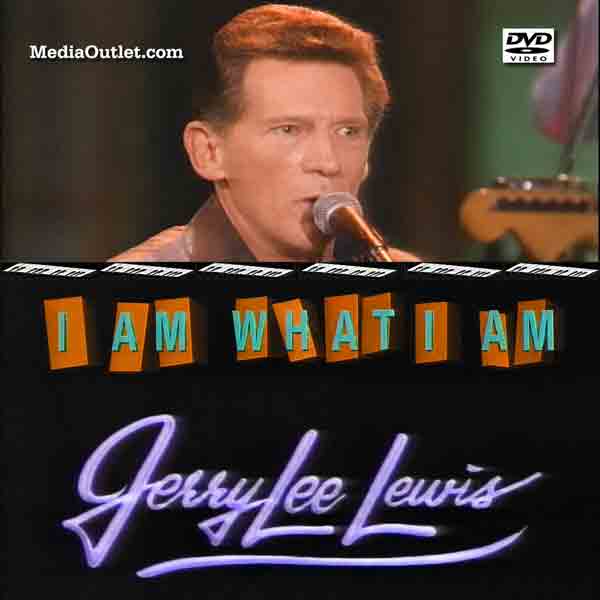
November 8: World Pianist Day: --
Dedicated primarily to pianists and their achievements. The world
has seen and will see many unsurpassed musicians whose music has
traversed through the ages. It's a day to treasure the emotions
pianists evoke with their performance. Indeed, it makes our hearts
move with ultimate joy. As many piano events as possible are held
to embrace this joy. Because most forms of Western music can use
the piano, pianists have a wide choice of styles to choose from,
including jazz and blues. It's also a chance for those who have
never been involved to give it a try. Typically, modern classical
pianists dedicate their careers to performing, recording,
teaching, and researching new works to expand their repertoire.
They do not usually write or transcribe music, as, for example,
pianists did in the 19th century. Some classical pianists may
specialize in accompaniment and chamber music, while others,
relatively few, will perform as full-time soloists. As for the
classical pianists, one of the greatest examples is Mozart. People
consider him the first "concert pianist" because he
often and widely performed on the piano. Composers of the
classical era, Beethoven and Clementi, were also famous for their
playing, as well as Liszt, Brahms, Chopin, Mendelssohn,
Rachmaninoff, and Schumann. And in the classical period, the piano
begins to consolidate its place in the hearts and souls of
everyday people. In turn, jazz pianists almost always perform with
other musicians. Comparing their playing with the playing of
classical pianists, we can say that it is freer, and there is an
atmosphere of spontaneity in their performances. They usually do
not record their compositions. Improvisation is a significant part
of their work. The famous jazz pianists are represented by Bill
Evans, Art Tatum, Duke Ellington, Thelonious Monk, Oscar Peterson,
and Bud Powell. On Sale Until Midnight Tonight PT!
https://store.earthstation1.com/jerry-lee-lewis-i-am-what-i-am-19871987.html
Today's
EarthStation1.com 15% (Or More!) Off Commemorative Memorial Title:
Watch Mr. Wizard Science TV Kid Shows Don Herbert DVD, MP4, USB
Drive
Today, November 8, 2026
November 8: National STEM/STEAM Day: --
National S.T.E.M./S.T.E.A.M. Day on November 8th calls for full
S.T.E.A.M. ahead! The day inspires kids to explore and pursue
their interests in Science, Technology, Engineering, Art, and
Math. Inspired by the Project MC2 brand, created by MGA
Entertainment, the S.T.E.A.M.- based franchise features four super
smart girls who are part of a super-secret spy organization called
NOV8 ("N-O-VEIGHT - that's "innovate").
S.T.E.M./S.T.E.A.M. is all around us and shapes our everyday
experiences. Of the U.S. Labor Department's predicted 10 fastest
growing occupations, nearly all of them are S.T.E.M./S.T.E.A.M.
careers; therefore an interest in S.T.E.M./S.T.E.A.M. early on can
lead to success later on in life. The U.S. has fallen behind other
nations in science and math education; we need to motivate young
kids to pursue these subjects to keep up with the rest of the
world. We must close the gender gap that exists in
S.T.E.M./S.T.E.A.M. related-careers. Building interest in girls is
critical to their future earning potential. Studies in the early
2000s revealed that U.S. students were not achieving in the STEM
disciplines at the same rate as students in other countries. The
report predicted dire consequences if the country could not
compete in the global economy as the result of a poorly prepared
workforce. Thus, educators focused attention on science, math, and
technology research; on economic policy; and on education. U.S.
prosperity seemed to depend on it. A 2006 study later showed that
a comparatively large proportion of students underperformed in
these subjects and that the country ranked near the bottom on
assessments of scientific competency and knowledge. The
international comparisons fueled discussion of U.S. education and
workforce needs. The bipartisan congressional STEM Education
Caucus noted: "Our knowledge-based economy is driven by
constant innovation. The foundation of innovation lies in a
dynamic, motivated and well-educated workforce equipped with STEM
skills." Further research uncovered the needs of school
systems and guided the development of appropriately targeted
solutions. The Claude Worthington Benedum Foundation, a
philanthropical organization based in southwestern Pennsylvania,
found that U.S. educators were unsure of the implications of STEM,
particularly when scientific and technological literacy of all
students was the goal. Educators lacked in-depth knowledge of STEM
careers, and, as a consequence, they were not prepared to guide
students to those fields. The findings from several studies on
educational practices encouraged U.S. state governors to seek
methods to lead their states toward the goal of graduating every
student from high school with essential STEM knowledge and
competencies to succeed in postsecondary education and work. Six
states received grants from the National Governors Association to
pursue helpful strategies. Growth in America's STEM jobs in the
first decade of the 21st century tripled the rate of growth in
non-STEM jobs. However, racial and gender gaps remained a problem.
Employers continued to struggle with the need for qualified STEM
workers. On Sale Until Midnight Tonight PT!
https://store.earthstation1.com/watch-mr-wizard-dvd-old-time-tv-kid-shows.html
Today's
EarthStation1.com 15% (Or More!) Off Commemorative Memorial Title:
The Capitalist Cartoons Of John Sutherland MP4 Video Download DVD
Today, November 8, 2026
November 8: Talk Money Day: -- This day
is designed to teach people to stop being afraid of talking about
money. This is how the day is distinguished from Talk Money Week,
which is also held in November to raise awareness. It turns out
that talking about money can be difficult, especially when it
comes to financial worries. People are afraid, ashamed, and
hesitant. And often they can't admit it to themselves. However,
conversations are important and can help them make better and less
risky financial decisions, get help when faced with financial
difficulties, and, most importantly, feel less anxious. The
invention of money occurred before the beginning of writing
history. Thus, any story about the development of money is largely
based on assumptions and logical conclusions. Significant evidence
confirms that ancient markets traded many things that could be
described as a means of exchange. These included livestock and
grain, that is, directly useful things. Even more so, beautiful
items such as cowrie shells or beads were exchanged for more
useful goods. However, such exchanges would be better described as
barter, and the usual exchange of a commodity does not technically
make that commodity "money" or "commodity money".
The ancient origins of economic systems precede written history.
Also, since ancient civilizations kept evolving at different rates
and did not keep accurate records, or were unfortunate that their
records were destroyed, it is impossible to trace the true origin
of money. In addition, the historical evidence confirms the idea
that money has acquired two forms and is divided into broad
categories of settlement money - debit and credit in books, and
money and material exchange; made of clay, leather, paper, etc. It
is very important to break down the barrier of talking about
money. After all, talking openly about money is vital to our
health, well-being, and relationships. Research shows that people
who talk about money can make better and less risky financial
decisions, have stronger personal relationships, help their
children develop good money habits for life, and have better
control over their financial situation. Promoting conversations
about money in our daily lives helps us build financial confidence
and resilience to withstand any event - it prepares us for the
future. Because, if we are not ready for this, it will be
difficult for us to cope when there is a strain on income or an
event that will change one's financial status. On Sale Until
Midnight Tonight PT!
https://store.earthstation1.com/capitalist-cartoons-us-probusiness-propaganda-animation-dvd.html
Today's
EarthStation1.com 15% (Or More!) Off Commemorative Memorial Title:
In The Suburbs: Life In Suburbia Films DVD, Video Download, USB
Drive
Today, November 8, 2026
November 8: World Town Planning Day
(World Urbanism Day): -- This day is set aside to commemorate the
important role planning and structuring play in the creation of
our communities. Town planning is one of the most important parts
of creating our organized, livable communities, and this act
gained full recognition when this day was founded in 1949 by late
professor Carlos Maria della Paolera. The holiday seeks to
encourage community planning by paying heed to environmental
factors involved in progressing a town. Take a few moments to
think about the area you live in. Think about how easy it is to
locate and navigate to your office, favorite grocery store, or
even your favorite bar. That ease would not have been possible
without the application of town planning. Urban or Town planning
is the most important process that goes into the development of
any urban, suburban, or rural area. It determines how we
seamlessly work, live, and play in any given environment. It is a
concept that has been in existence for as long as the Mesopotamian
and Egyptian civilizations and has positively evolved. In more
technical terms, town planning refers to the technical processes
that focus on the design, development, and use of infrastructure
put in place when setting up a community. This planning focuses on
factors like accessibility, transportation, communication, and
distribution networks by applying knowledge from different areas
of life such as engineering, architecture, politics, and even
human psychology. The idea of a planned out urban area can be
traced back to as far as civilizations found in the third
millennium B.C with Greek city-states centering on grid-like plans
for military defenses and public convenience. From the 15th
century, more thought was being put into urban planning, and by
the 20th century the concerns of the general public and the
working man became a priority, and urban planning took on a more
central approach. The organization for World Urbanism Day or World
Town Planning Day was founded by the late Professor Carlos Maria
della Paolera in 1949, as a bid to look at urban planning from a
global approach and to promote its role in creating livable
communities. This holiday is globally recognized by over 30
countries and four continents and is celebrated on November 8
worldwide. On Sale Until Midnight Tonight PT!
https://store.earthstation1.com/in-the-suburbs-life-in-suburbia-films-dvd.html
Today's
EarthStation1.com 15% (Or More!) Off Commemorative Memorial Title:
Duck & Cover & More! Nuclear War Information Films DVD,
Download, USB
Today, November 8, 2026
November 8: The International Day Of
Radiology (IDOR) (World Radiography Day): -- Commemorates the
anniversary of the discovery of x-rays, and promotes radiology's
role in healthcare. The European Society of Radiology (E.S.R.),
the Radiological Society of North America, and the American
College of Radiology (A.C.R.) jointly launched it in 2012. Nearly
200 national sub-specialty and allied organizations around the
world recognize and celebrate the International Day of Radiology.
Every year, a theme is chosen that focuses on various radiology
specialties. Radiology, a discipline of medicine, utilizes medical
imaging to diagnose and treat diseases that affect both animals
and humans. On November 8, 1895, Wilhelm Conrad Rontgen, a German
mechanical engineer and physicist, discovered x-rays by accident
while exploring cathode rays, thereby establishing the groundwork
for the medical specialty of radiology. Rontgen went on to
discover and create electromagnetic radiation in the X-ray or
Rontgen ray wavelength range, earning him the Nobel Prize in
Physics in 1901. The International Day of Radiology was
established in 2011 as a follow-up to the European Day of
Radiology. On February 10, 2011, the first and only European Day
of Radiology (EDoR) was conducted to honor the anniversary of
Rontgen's death. The European Society of Radiology hosted the
event. Following the European Day of Radiology's success, the
E.S.R. collaborated with the Radiological Society of North America
and the American College of Radiology to create the International
Day of Radiology. It was also determined that the anniversary of
Rontgen's death should be relocated to the anniversary of his
discovery of the x-ray. On November 28, 2011, the three founding
societies formally recognized the day during the annual
Radiological Society of North America meeting in Chicago. November
8 was eventually picked, and all radiological organizations around
the world commemorate it. On Sale Until Midnight Tonight PT!
https://store.earthstation1.com/duck-and-cover-and-more-atomic-war-films-2-dual-layer-dvd2.html
Today's
EarthStation1.com 15% (Or More!) Off Commemorative Memorial Title:
The Nobel Century Nobel Prize History TV Series DVD, MP4, USB
Stick
Today, November 8, 2026
November 8, 1895: Great Discoveries:
X-rays (X-Radiation, Rontgen Radiation, Roentgen Radiation): --
Wilhelm Roentgen, German mechanical engineer and physicist, first
produces, detects and discovers at the University of Wuerzburg in
Germany a form of a then unknown type of radiation, now known as
X-Rays, a high-energy electromagnetic radiation shorter than those
of UV rays and longer than those of gamma rays, that enables the
simultaneous viewing of both the interior and exterior of an
object in a single image. On the following December 28, Wilhelm
Conrad Rontgen (Anglicized: Roentgen) (March 27, 1845 - February
10, 1923) published a paper detailing his discovery. This
achievement earned him the first Nobel Prize In Physics in 1901.
X-rays are widely used in the medical diagnostic fields of
Radiography, an imaging technique using X-rays, gamma rays, or
similar ionizing radiation and non-ionizing radiation to view the
internal form of an object (e.g., checking for broken bones), and
Radiology, the medical discipline that uses medical imaging to
diagnose diseases and guide their treatment. X-Rays are also used
in the material sciences for the identification of some chemical
elements and detecting weak points in construction materials. In
honour of his accomplishments, in 2004 the International Union of
Pure and Applied Chemistry (IUPAC) named element 111, roentgenium,
a radioactive element with multiple unstable isotopes, after him.
On Sale Until Midnight Tonight PT!
https://store.earthstation1.com/the-nobel-century-nobel-prize-history-tv-series-dvd-mp4-us4.html
Today's
EarthStation1.com 15% (Or More!) Off Commemorative Memorial Title:
Appointment With Destiny: Cortez and Montezuma + Aztec Bonus MP4
DVD
Today, November 8, 2026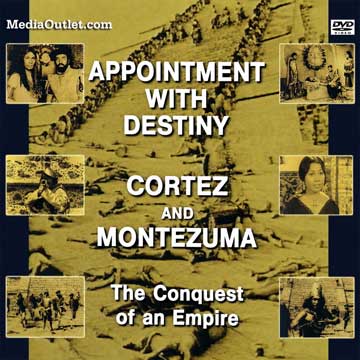
November 8, 1519: The Spanish
Colonization Of The Americas: Indigenous Rebellions In Mexico And
Central America: The Spanish Conquest Of The Aztec Empire (The
Conquest Of Mexico, The Spanish-Aztec War (1519-1521), The
Conquest Of Tenochtitlan, The Conquest Of Mexico-Tenochtitlan): --
Hernan Cortes deceitfully conquers Mexico when he and his troops,
having marched through the interior of Mexico wince landing on the
Yucatan Peninsula in April, arrive at the Aztec capital of
Tenochtitlan, where Aztec Emperor Moctezuma welcomes him with a
great celebration; despite this friendly reception, Cortes
captures him and holds him hostage. The Spanish Conquest Of The
Aztec Empire, also known as the Conquest of Mexico (1519-21), was
one of the primary events in the Spanish colonization of the
Americas. There are multiple 16th-century narratives of the events
by Spanish conquerors, their indigenous allies, and the defeated
Aztecs. It was not solely a contest between a small contingent of
Spaniards defeating the Aztec Empire but rather the creation of a
coalition of Spanish invaders with tributaries to the Aztecs, and
most especially the Aztecs' indigenous enemies and rivals. They
combined forces to defeat the Mexica of Tenochtitlan over a
two-year period. For the Spanish, the expedition to Mexico was
part of a project of Spanish colonization of the New World after
twenty-five years of permanent Spanish settlement and further
exploration in the Caribbean. Following an earlier expedition to
Yucatan led by Juan de Grijalva in 1518, Spanish conquistador
Hernan Cortes led an expedition (entrada) to Mexico. Two years
later, in 1519, Cortes and his retinue set sail for Mexico. The
Spanish campaign against the Aztec Empire had its final victory on
13 August 1521, when a coalition army of Spanish forces and native
Tlaxcalan warriors led by Cortes and Xicotencatl the Younger
captured the emperor Cuauhtemoc and Tenochtitlan, the capital of
the Aztec Empire. The fall of Tenochtitlan marks the beginning of
Spanish rule in central Mexico, and they established their capital
of Mexico City on the ruins of Tenochtitlan. Cortes made alliances
with tributary city-states (altepetl) of the Aztec Empire as well
as their political rivals, particularly the Tlaxcalteca and
Texcocans, a former partner in the Aztec Triple Alliance. Other
city-states also joined, including Cempoala and Huexotzinco and
polities bordering Lake Texcoco, the inland lake system of the
Valley of Mexico. Particularly important to the Spanish success
was a multilingual (Nahuatl, a Maya dialect, and Spanish)
indigenous slave woman, known to the Spanish conquistadors as Dona
Marina, and generally as La Malinche. After eight months of
battles and negotiations, which overcame the diplomatic resistance
of the Aztec Emperor Moctezuma II to his visit, Cortes arrived in
Tenochtitlan on 8 November 1519, where he took up residence with
fellow Spaniards and their indigenous allies. When news reached
Cortes of the death of several of his men during the Aztec attack
on the Totonacs in Veracruz, Cortes claims that he took
Motecuhzoma captive. Capturing the cacique or indigenous ruler was
a standard operating procedure for Spaniards in their expansion in
the Caribbean, so capturing Motecuhzoma had considerable precedent
but modern scholars are skeptical that Cortes and his countrymen
took Motecuhzoma captive at this time. They had great incentive to
claim they did, owing to the laws of Spain at this time, but
critical analysis of their personal writings suggest Motecuhzoma
was not taken captive until a much later date. When Cortes left
Tenochtitlan to return to the coast and deal with the expedition
of Panfilo de Narvaez, sent to rein in Cortes's expedition that
had exceeded its specified limits, Cortes's right-hand man Pedro
de Alvarado was left in charge. Alvarado allowed a significant
Aztec feast to be celebrated in Tenochtitlan and on the pattern of
the earlier massacre in Cholula, closed off the square and
massacred the celebrating Aztec noblemen. The official biography
of Cortes by Francisco Lopez de Gomara contains a description of
the massacre. The Alvarado massacre at the Main Temple of
Tenochtitlan precipitated rebellion by the population of the city.
Moctezuma was killed, although the sources do not agree on who
killed him. According to one account, when Moctezuma, now seen by
the population as a mere puppet of the invading Spaniards,
attempted to calm the outraged populace, he was killed by a
projectile. According to an indigenous account, the Spanish killed
Moctezuma. Cortes had returned to Tenochtitlan and his men fled
the capital city during the Noche Triste in June 1520. The
Spanish, Tlaxcalans and reinforcements returned a year later on 13
August 1521 to a civilization that had been weakened by famine and
smallpox. This made it easier to conquer the remaining Aztecs.
Many of those on the Cortes expedition of 1519 had never seen
combat before, including Cortes. A whole generation of Spaniards
later participated in expeditions in the Caribbean and Tierra
Firme (Central America), learning strategy and tactics of
successful enterprises. The Spanish conquest of Mexico had
antecedents with established practices. The fall of the Aztec
Empire was the key event in the formation of the Spanish Empire
overseas, with New Spain, which later became Mexico. On Sale Until
Midnight Tonight PT!
https://store.earthstation1.com/appointment-with-destiny-cortez-and-montezuma-dvd.html
Today's
EarthStation1.com 15% (Or More!) Off Commemorative Memorial Title:
The Western Tradition TV Series DVD, MP4 Video Download, USB Drive
Today, November 8, 2026
November 8, 1620: The French-Habsburg
Rivalry: The European Wars Of Religion: The Thirty Years' War: The
Bohemian Revolt: The Battle Of White Mountain: -- In an important
two-hour battle at White Mountain (now part of the city of Prague)
near Prague, Bohemian Confederation (modern Czech Republic) in the
early stages of the Thirty Years' War that marked the end of the
Bohemian period of the Thirty Years' War and decisively influenced
the fate of the Czech lands for the next 300 years, the combined
27,000-man armies of Ferdinand II, Holy Roman Emperor led by
Charles Bonaventure de Longueval, Count of Bucquoy and the German
Catholic League under Johann Tserclaes, Count of Tilly and the
future general Albrecht Von Wallenstein at Bila Hora decisively
defeats an army of 15,000 Bohemians and mercenaries under
Christian Of Anhalt (Christian I, Prince of Anhalt-Bernburg, ruler
of Anhalt-Bernburg, a duchy of the German Confederation) Its
aftermath drastically changed the religious landscape of the Czech
lands after two centuries of Protestant dominance; Roman
Catholicism retained majority in the Czech lands until the late
20th century. On Sale Until Midnight Tonight PT!
https://store.earthstation1.com/the-western-tradition-dvd-set-all-52-shows-13-d5213.html
Today's
EarthStation1.com 15% (Or More!) Off Commemorative Memorial Title:
Abraham Lincoln Documentaries Set MP4 Video Download Or DVD
Today, November 8, 2026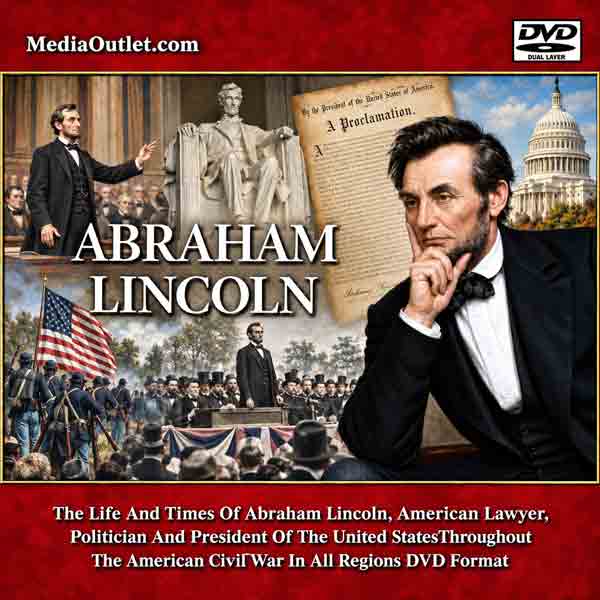
November 8, 1864: Elections: Elections In
The United States: The 1864 United States Presidential Election:
-- Incumbent President Abraham Lincoln of the National Union Party
easily defeats the Democratic nominee, former General George B.
McClellan, by a wide margin of 212-21 in the electoral college,
with 55% of the popular vote. The 1864 United States Presidential
Election was the 20th quadrennial presidential election, and was
held near the end of the American Civil War. For the election, the
Republican Party and some Democrats created the National Union
Party, especially to attract War Democrats. Despite some
intra-party opposition from Salmon Chase and the Radical
Republicans, Lincoln won his party's nomination at the 1864
National Union National Convention. Rather than re-nominate Vice
President Hannibal Hamlin, the convention selected Andrew Johnson
of Tennessee, a War Democrat, as Lincoln's running mate. John C.
Fremont started to run as the nominee of the new Radical Democracy
Party, which criticized Lincoln for being too moderate on the
issue of racial equality, but Fremont withdrew from the race in
September and that new party dissolved. The Democrats were divided
between the Copperheads, who favored immediate peace with the
Confederacy, and War Democrats, who supported the war. The 1864
Democratic National Convention nominated McClellan, a War
Democrat, but adopted a platform advocating peace with the
Confederacy, which McClellan rejected. The Confederacy seemed to
have survival potential in summer 1864, but was visibly collapsing
by election day in November. Despite his early fears of defeat,
Lincoln won strong majorities in the popular and electoral vote,
partly as a result of the recent Union victory at The Battle Of
Atlanta. As the Civil War was still raging, no electoral votes
were counted from any of the eleven southern states that had
joined the Confederate States of America. Lincoln's re-election
ensured that he would preside over the successful conclusion of
the Civil War. Lincoln's victory made him the first president to
win re-election since Andrew Jackson in 1832, as well as the first
Northern president to ever win re-election. Lincoln was
assassinated less than two months into his second term, and he was
succeeded by his vice president, Andrew Johnson, who favored quick
restoration of the seceded states to the Union without protection
for the former slaves. This led to conflict with the
Republican-dominated Congress, culminating in his impeachment by
the House of Representatives in 1868. He was acquitted in the
Senate by one vote. On Sale Until Midnight Tonight PT!
https://store.earthstation1.com/abraham-lincoln-documentaries-dvd.html
Today's
EarthStation1.com 15% (Or More!) Off Commemorative Memorial Title:
Mr. President US Presidential History Radio w/Edward Arnold CD MP3
USB
Today, November 8, 2026
November 8, 1892: Elections: Elections In
The United States: The 1892 United States Presidential Election:
-- Former Democratic President Grover Cleveland defeats incumbent
Republican President Benjamin Harrison, in a rematch of the
closely contested 1888 presidential election. The 1892 United
States Presidential Election was the 27th quadrennial presidential
election. Cleveland's victory made him the first and, to date, the
only person in American history to be elected to a non-consecutive
second presidential term. It was also the first time incumbents
were defeated in consecutive elections-the second being Jimmy
Carter's defeat of Gerald Ford in 1976, followed by Carter's
subsequent loss to Ronald Reagan in 1980. Additionally, Harrison's
loss marked the second time an elected president lost the popular
vote twice, the first being John Quincy Adams in the 1820s. This
feat was not repeated until Donald Trump lost the popular vote in
2016 and 2020. Though some Republicans opposed Harrison's
re-nomination, Harrison defeated James G. Blaine and William
McKinley on the first presidential ballot of the 1892 Republican
National Convention. Cleveland defeated challenges by David B.
Hill and Horace Boies on the first presidential ballot of the 1892
Democratic National Convention, becoming both the first
presidential candidate and the first Democrat to win his party's
presidential nomination in three elections. Groups from The Grange
and the Knights of Labor joined together to form a new party
called the Populist Party. It had a ticket led by former
Congressman James B. Weaver of Iowa. The campaign centered mainly
on economic issues, especially the protectionist 1890 McKinley
Tariff. Cleveland ran on a platform of lowering the tariff and
opposed the Republicans' 1890 voting rights proposal. Cleveland
was also a proponent of the gold standard, while the Republicans
and Populists both supported bimetalism. Cleveland swept the Solid
South and won several important swing states, taking a majority of
the electoral vote and a plurality of the popular vote. As of
2020, he is the fourth of seven presidential nominees to win a
significant number of electoral votes in at least three elections,
the others being Thomas Jefferson, Henry Clay, Andrew Jackson,
William Jennings Bryan, Franklin D. Roosevelt, and Richard Nixon.
Of these, Jackson, Cleveland, and Roosevelt also won the popular
vote in at least three elections. Weaver won 8.5% of the popular
vote and carried several Western states, while John Bidwell of the
Prohibition Party won 2.2% of the popular vote. The Democrats did
not win another presidential election until 1912. On Sale Until
Midnight Tonight PT!
https://store.earthstation1.com/mister-president-historical-old-time-radio-mp3-c3.html
Today's
EarthStation1.com 15% (Or More!) Off Commemorative Memorial Title:
T.R.: The Life Of Theodore Roosevelt DVD, Video Download, USB
Drive
Today, November 8, 2026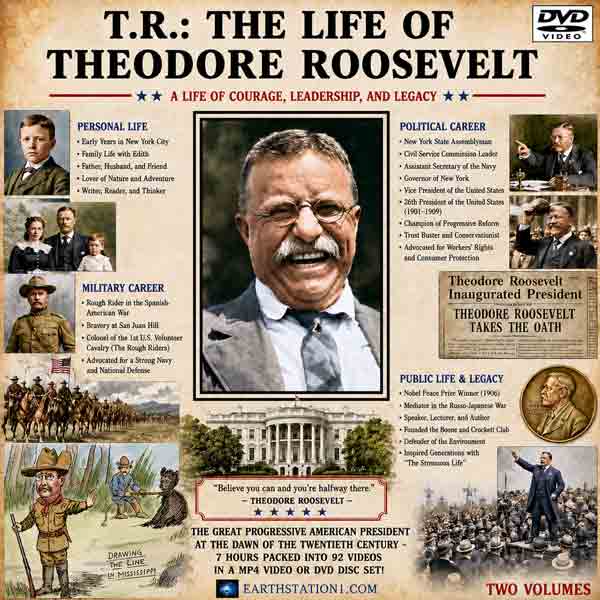
November 8, 1904: Elections: Elections In
The United States: The 1904 United States Presidential Election:
-- Incumbent Republican President Theodore Roosevelt defeats the
Democratic nominee, Alton B. Parker, making Roosevelt the first
president who ascended to the presidency upon the death of his
predecessor to win a full term in his own right. The 1904 United
States presidential election was the 30th quadrennial presidential
election. Roosevelt took office in September 1901 following the
assassination of his predecessor, William McKinley. After the
February 1904 death of McKinley's ally, Senator Mark Hanna,
Roosevelt faced little opposition at the 1904 Republican National
Convention. The conservative Bourbon Democrat allies of former
President Grover Cleveland temporarily regained control of the
Democratic Party from the followers of William Jennings Bryan, and
the 1904 Democratic National Convention nominated Alton B. Parker,
Chief Judge of the New York Court of Appeals. Parker triumphed on
the first ballot of the convention, defeating newspaper magnate
William Randolph Hearst. As there was little difference between
the candidates' positions, the race was largely based on their
personalities; the Democrats argued the Roosevelt presidency was
"arbitrary" and "erratic." Republicans
emphasized Roosevelt's success in foreign affairs and his record
of firmness against monopolies. Roosevelt easily defeated Parker,
sweeping every US region except the South, while Parker lost
multiple states won by Bryan in 1900, as well as his home state of
New York. Roosevelt's popular vote margin of 18.8% was the largest
since James Monroe's victory in the 1820 presidential election,
and would be the biggest popular vote victory in the century
between 1820 and Warren Harding's 1920 landslide. With Roosevelt's
landslide victory, he became the first presidential candidate in
American history to receive at least 300 electoral votes in a
victorious campaign in which the votes have not been disallowed.
It was also the first presidential election since 1860 and the
second presidential election in United States History in which
both major party candidates were registered in the same home
state, the others being 1920, 1940, 1944 and 2016. On Sale Until
Midnight Tonight PT!
https://store.earthstation1.com/tr-the-life-of-theodore-roosevelt-dvd-2-disc-se2.html
Today's
EarthStation1.com 15% (Or More!) Off Commemorative Memorial Title:
Mein Kampf: A Blueprint For The Age Of Chaos 1960 DVD, MP4, USB
Drive
Today, November 8, 2026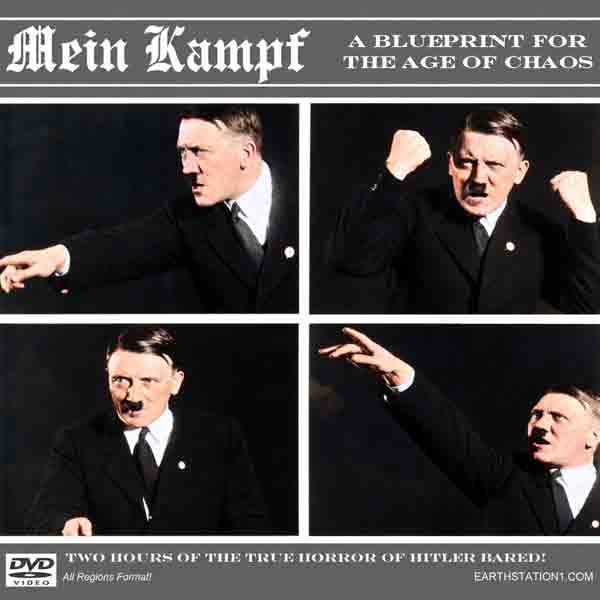
November 8-9, 1923: The Interwar Period
(The Aftermath Of World War I, The Interbellum, Between The Wars):
Political Violence In Germany (1918-1933): The Beer Hall Putsch
(The Munich Putsch, The Hitler Putsch, The
Hitler-Ludendorff-Putsch) (German: Der Hitlerputsch, Der
Hitler-Ludendorff-Putsch): -- The Nazi Party, led by Adolf Hitler,
along with Generalquartiermeister Erich Ludendorff, Herman
Goering, Rudolf Hess and other Kampfbund (German:
Battle-League)leaders, launch a failed coup attempt in the
Buergerbraukeller in Munich, Germany in order seize power over
Germany. About two thousand Nazis marched to the centre of Munich,
where they confronted the police, which resulted in the death of
16 Nazis and four police officers. Hitler himself was not wounded
during the clash, although he locked his left arm with the right
arm of Max Erwin Von Scheubner-Richter who, when he was shot and
killed, pulled Hitler to the pavement with him. Hitler escaped
immediate arrest and was spirited off to safety in the
countryside. After two days, Hitler was arrested and charged with
treason. From Hitler's perspective, there were three positive
benefits from this putsch: 1) it brought Hitler to the attention
of the German nation and generated front page headlines in
newspapers around the world, as his arrest was followed by a
24-day trial, which was widely publicized and gave Hitler a
platform to publicize his nationalist sentiment to the nation,
which resulted in being found guilty of treason and sentenced to
five years in Landsberg Prison; 2) He wrote Mein Kampf, which was
dictated to his fellow prisoners Emil Maurice and Rudolf Hess; 3)
the path to power was now possible through legitimate means rather
than revolution or force. The most significant outcome of the
putsch was Hitler's decision to change Nazi Party tactics to
increasing rely on developing and furthering Nazi propaganda. On
Sale Until Midnight Tonight PT!
https://store.earthstation1.com/mein-kampf-1960-dvd-adolf-hitler-third-reich-holoc1960.html
Today's
EarthStation1.com 15% (Or More!) Off Commemorative Memorial Title:
Brother, Can You Spare A Dime? (1975) DVD, Video Download, USB
Drive
Today, November 8, 2026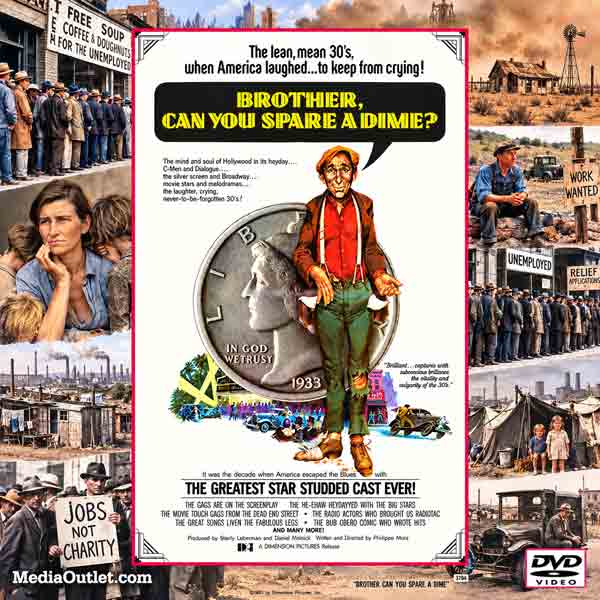
November 8, 1932: Elections: Elections In
The United States: The 1932 United States Presidential Election:
-- Incumbent Republican President Herbert Hoover is defeated in a
landslide by Democrat Franklin D. Roosevelt, the Governor of New
York and the vice presidential nominee of the 1920 presidential
election, becoming the first Democrat in 80 years to win an
outright majority in the popular and electoral votes (the last one
being Franklin Pierce in 1852), occuring on the 28th anniversary
of Franklin Roosevelt's cousin Theodore Roosevelt's victory in the
1904 United States Presidential Election which made Theodore
Roosevelt the first president who ascended to the presidency upon
the death of his predecessor to win a full term in his own right.
The 1932 United States presidential election was the 37th
quadrennial presidential election, and took place against the
backdrop of the Great Depression. Hoover was the last incumbent
president to lose an election to another term until another
Republican presidential candidate, Gerald Ford, lost 44 years
later. The election marked the effective end of the Fourth Party
System, which had been dominated by Republicans. Despite
disastrous economic conditions due to the Great Depression, Hoover
faced little opposition at the 1932 Republican National
Convention. Roosevelt was widely considered the front-runner at
the start of the 1932 Democratic National Convention, but was not
able to clinch the nomination until the fourth ballot of the
convention. The Democratic convention chose a leading Southern
Democrat, Speaker of the House John Nance Garner of Texas, as the
party's vice presidential nominee. Roosevelt united the party,
campaigning on the failures of the Hoover administration. He
promised recovery with a "New Deal" for the American
people. Roosevelt won by a landslide in both the electoral and
popular votes, carrying every state outside of the Northeast and
receiving the highest percentage of the popular vote of any
Democratic nominee up to that time. Hoover had won over 58% of the
popular vote in the 1928 presidential election, but his share of
the popular vote declined to 39.6% in 1932. Socialist Party
nominee Norman Thomas won 2.2% of the popular vote. Subsequent
Democratic landslides in the 1934 mid-term elections and the 1936
presidential election confirmed the commencement of the Fifth
Party System, which was dominated by Roosevelt's New Deal
Coalition. Roosevelt's election ended the era of Republican
dominance in presidential politics that lasted from the beginning
of the Civil War in 1860 to the middle of the Great Depression in
1932. On Sale Until Midnight Tonight PT!
https://store.earthstation1.com/brother-can-you-spare-a-dime-1975-great-depression-films1975.html
Today's
EarthStation1.com 15% (Or More!) Off Commemorative Memorial Title:
Der Ewige Jude The Eternal Jew + Bonus Nuremberg Trials DVD MP4
USB
Today, November 8, 2026
November 8, 1937: Aesthetics: Performing
Arts: Premieres: Film Premieres: German Film Premieres: -- The
Nazi exhibition Der Ewige Jude (German: "The Eternal Jew"),
featuring the Nazi racial hatred film of the same name, opens at
the Library of the German Museum in Munich, where it runs until
January 31, 1938; after the exhibition ended in Munich, it was
displayed in Vienna from August 2 until October 23, 1938 and
subsequently in Berlin from November 12, 1938 until January 31,
1939. In 1940, Fritz Hippler was responsible for the management
and design of the feature-length documentary film "The
Eternal Jew", one of if not the vilest anti-Semitic Nazi
film. The film historian Frank Noack assessed "The Eternal
Jew" as "probably the most radical inflammatory film of
all time". An article written by Hippler in the magazine "The
film" stated that his film marked Jews as "parasites of
national degeneracy." The film served as a preparation and
agreement of the population in the coming holocaust and was mainly
used for training of police and SS troops. In the same year,
Hippler received from Hitler a secret special endowment of 60,000
Reichsmarks in recognition of his services to the Reich. On Sale
Until Midnight Tonight PT!
https://store.earthstation1.com/der-ewige-jude-the-eternal-jew-dvd-nazi-antisemitic-hate-film.html
Today's
EarthStation1.com 15% (Or More!) Off Commemorative Memorial Title:
The Plots Against Hitler Walter Cronkite Daniel Schorr DVD, MP4,
USB
Today, November 8, 2026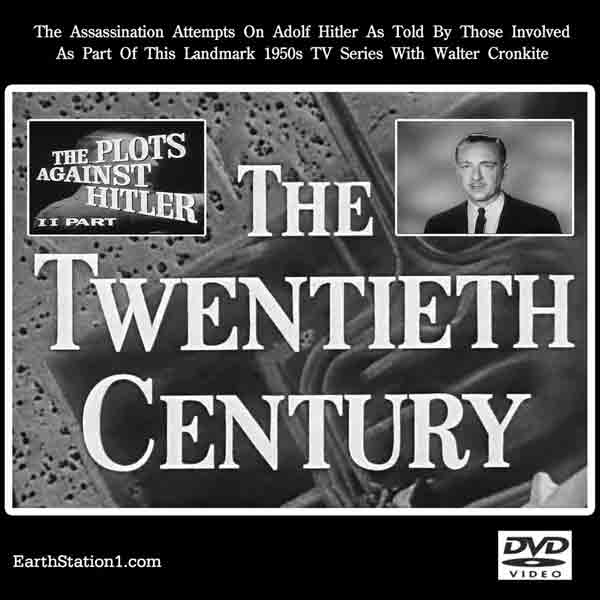
November 8, 1939: Nazi Germany (The
German Reich, The Third Reich): German Resistance To Nazism
(German: Widerstand): Assassination Attempts On Adolf Hitler: --
An elaborate assassination attempt on Adolf Hitler and other
high-ranking Nazi leaders by Johann Georg Elser fails during a
commemoration ceremony of the 16th anniversary of the Beer Hall
Putsch held at the Buergerbraukeller in Munich. A bomb exploded
soon after Hitler had exited following a speech commemorating the
1923 Beer Hall Putsch. Eight others were killed and sixty two
wounded. Elser was held as a prisoner for over five years until
executed at the Dachau concentration camp on April 9, 1945, barely
three weeks before the camp was liberated by the American army.
Johann Georg Elser was a German worker at the Waldenmaier armament
factory in Heidenheim who constructed and placed a bomb near the
platform from which Hitler was to deliver a speech. It did not
kill Hitler, who left earlier than expected, but it did kill 8
people and injured 62 others. Elser was held as a prisoner for
more than five years until he was executed at the Dachau
concentration camp less than a month before the surrender of Nazi
Germany. On Sale Until Midnight Tonight PT!
https://store.earthstation1.com/the-plots-against-hitler-walter-cronkite-dvd-mp4-us4.html
Today's
EarthStation1.com 15% (Or More!) Off Commemorative Memorial Title:
Operation Torch The Liberation Of French North Africa MP4 Download
DVD
Today, November 8, 2026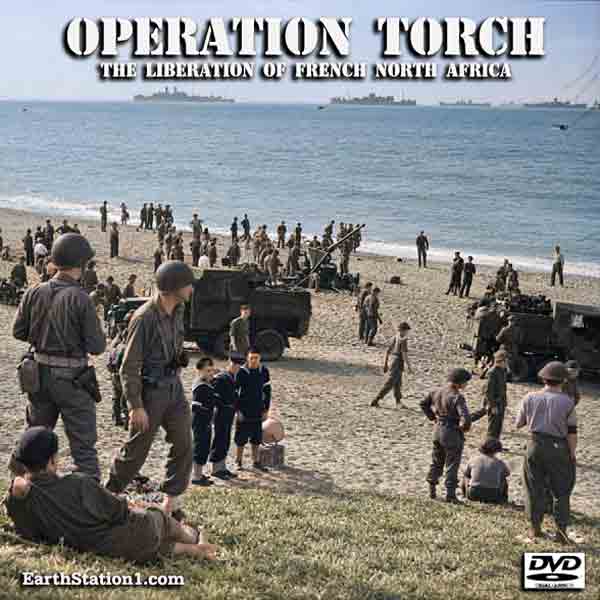
November 8, 1942: The European Civil War:
World War II: The Second European War (The European Theater Of
World War II): The North African Campaign: The Western Desert
Campaign (The Desert War): Operation Torch: -- The Allied Invasion
Of French North Africa codenamed Operation Torch begins with a
preliminary French Resistance coup in Algiers, the capital and
largest city of Algeria, by the Geo Gras Group, 400 mainly Jewish
French Resistance fighters. Starting at midnight, the force under
the command of Henri d'Astier de la Vigerie and Jose Aboulker
seized and neutralized key targets, including the telephone
exchange, radio station, governor's house and the headquarters of
the Vichyist XIXth Army Corps. With their success after 15 hours
of fighting, and the arrest several Vichyist military commanders -
including General Alphonse Juin, the senior French Army officer in
North Africa, and Admiral Francois Darlan, the commander of all
French forces - the Allied Invasion Of French North Africa began.
It was the first mass Allied Operation of World War II, the first
mass involvement of US troops in the European-North African
Theatre, and the first major airborne assault carried out by the
United States. On Sale Until Midnight Tonight PT!
https://store.earthstation1.com/operation-torch-the-liberation-of-french-north-africa-mp4-download-dv4.html
Today's
EarthStation1.com 15% (Or More!) Off Commemorative Memorial Title:
Air Combat Aerial Warfare Documentary Series DVD, Download, USB
Drive
Today, November 8, 2026
November 8, 1950: Korea: The History Of
Korea: The Aftermath Of World War II: The Cold War: The Cold War
In Asia: The Korean Conflict: The Cold War (1947-1953): The Cold
War In Asia: The Korean War: Air Warfare Of The Korean War: --
United States Air Force Maj. Evans G. Stephens and Lt. Russell J.
Brown, each piloting a F-80C Shooting Star, engage in the first
jet aircraft-to-jet aircraft dogfight in history, each in a
dogfight with one of two North Korean MiG-15s near Sinuiju, a
North Korean city that lay along the Yalu River, resulting in one
MiG-15 shot down by Lt. Brown. The dogfights occurred during a Far
East Air Forces campaign of B-29 Superfortress incendiary attacks
on North Korean cities to eliminate military targets along the
Yalu River, among which were the bridges crossing the river at
Sinuiju. Early in November 1950, Gen. Douglas MacArthur, the
United Nations commander, authorized the bombing campaign after
successfully convincing President Harry S. Truman and the Joint
Chiefs that Chinese Communist Forces "in large force are
pouring across all bridges over the Yalu from Manchuria.:"
The only way to stop this flow was to destroy the international
bridges and other installations supporting the enemy's advance.
Officials in Washington had feared international complications,
but this concern was negated given the military situation. Gen.
George S. Stratemeyer, Far East Air Forces commander, ordered a
series of B-29 strikes against four North Korean cities bordering
the Yalu between Nov. 4 -7, 1950 with an attack on Sinuiju Nov. 7.
Bad weather prevented the all-out attack on Sinuiju on this date;
however, B-29s were to conduct their operation on the next day.
Before this B-29 bombing campaign, FEAF fighter aircraft and
medium bombers already had attacked the North Korean airfield at
Sinuiju. On Nov. 1, 1950, MiG-15s appeared for the first time in
the war, and fired at F-51 fighters over Sinuiju before the
MiG-15s returned to their safe haven of the Antung airfield
complex across the Yalu River. The appearance of the MiG-15 was an
unexpected development for U.S. fighter pilots. Little was known
about its capabilities; however, the B-29 raids continued as
planned. On Nov. 8, 1950, the mission for the 51 FIW F-80 pilots
was to knock out the antiaircraft artillery positions at Sinuiju
before the Superfortresses conducted their attack shortly before
noon. Although the 51st FIW was based at Kimpo Air Base (K-14), it
also staged flights from airfields at Pyongyang, North Korea (K-23
and K-24). During the morning of Nov. 8, 1950, the 16 FIS launched
four flights of four F-80s each to attack the airfield at Sinuiju.
Upon arrival over the airfield, as one flight completed several
strafing runs at antiaircraft positions, it climbed up to fly top
cover for the flight behind it. Lieutenant Brown was in the number
two position of his flight following his element leader, Maj.
Evans G. Stephens, 16 FIS commander. Their flight was the last of
the squadron's attack. By the time Lieutenant Brown's flight made
its three strafing runs of the airfield, the ack-ack of
antiaircraft fire was puffing everywhere. He later recounted, "We
could have got out and walked on it." He noted that most of
the fire came from the Communist Chinese side of the Yalu River.
After Lieutenant Brown and Major Stephens completed their runs,
they climbed to 20,000 feet to cover the second element of their
flight -1st Lt. Ralph N. Giel and 1st Lt. Richard D. Escola--on
their strafing runs. As Lieutenant Brown and Major Stephens
reached top cover, they began peering in all directions, searching
for signs of enemy aircraft. Earlier, as the squadron began its
strafing runs, four Yak fighters appeared on the Chinese side of
the Yalu. Lieutenant Brown searched for them, but these aircraft
apparently departed the area. However, Major Stephens soon spotted
eight to 12 MiG-15s approaching their position from the south and
above them about 30 miles away, on the Korean side of the border.
He ordered Lieutenants Giels and Escola to "come on up"
from their strafing runs. With the four F-80s at 20,000 feet,
Major Stephens saw two of the MiG-15s pull out in a dive, and
heading toward the Antung complex at almost their same altitude.
The two MiG-15s, though, also were heading the flight of F-80s.
Major Stephens banked sharply to the left with Lieutenant Brown
closely behind. Lieutenant Brown still had not spotted the
MiG-15s, and noted after the battle, "I was looking around
like mad and flying formation at the same time." However, as
soon as Major Stephens completed his turn, Lieutenant Brown saw
the two MiG-15s flying a loose formation. The lead MiG-15 broke
directly in front of Major Stephens, and second one in front of
Lieutenant Brown. Major Stephens maneuvered his F-80 to get in a
firing position on the first MiG-15. At the same time, Lieutenant
Brown banked his F-80 into a firing position on the second MiG-15.
The second MiG-15 began a climbing turn to the left, but
Lieutenant Brown stayed tight inside the MiG's turn while he
figured its lead. With only one of his four .50-caliber guns still
working--the other three had jammed on the strafing runs--he fired
four short bursts. They were misses. The MiG-15 pilot then did a
wingover and began a dive. Lieutenant Brown reacted instinctively,
and dove after the MiG-15, saying to himself, "Damm, I'm
going to get him." In seconds, the two jet fighters "hurtled
earthward," and Lieutenant Brown quickly closed to within
1,000 feet of the MiG-15--straight down toward the earth. Although
he could not gain on the MiG-15, Lieutenant Brown set his sights,
and fired one burst. Then he fired three short volleys. Red flames
puffed out of the right side of the MiG's fuselage, near the
engine section. Lieutenant Brown thought "it was now or
never," and "squeezed the trigger and held it down."
The MiG-15 then burst into flame. By now Lieutenant Brown was
hurling in a 600-mph dive only 2,000 feet from the ground. With
the MiG-15 exploding, Lieutenant Brown hurriedly pulled the F-80
out of its dive as the aircraft shuddered dangerously close to the
ground before he climbed back for altitude. Although the aerial
combat between Lieutenant Brown and his MiG-15 opponent took about
60 seconds, it earned him a unique stature in the annals of
aviation history. It was also his only aerial combat victory. On
Sale Until Midnight Tonight PT!
https://store.earthstation1.com/air-combat-all-13-aerial-warfare-history-tv-shows-collecti13.html
Today's
EarthStation1.com 15% (Or More!) Off Commemorative Memorial Title:
War And Peace In The Nuclear Age TV Series DVD, Download, USB
Drive
Today, November 8, 2026
November 8, 1957: The Aftermath Of World
War II: The Cold War: Nuclear Warfare: Nuclear Weapons Testing:
British Nuclear Warfare: British Nuclear Weapons Testing:
Operation Grapple X, Round C1: -- The United Kingdom conducts its
first successful hydrogen bomb test over Kiritimati in the
Pacific. Operation Grapple was a set of four series of British
nuclear weapons tests of early atomic bombs and hydrogen bombs
carried out in 1957 and 1958 at Malden Island and Kiritimati
(Christmas Island) in the Gilbert and Ellice Islands in the
Pacific Ocean (modern Kiribati) as part of the British hydrogen
bomb programme. Nine nuclear explosions were initiated,
culminating in the United Kingdom becoming the third recognised
possessor of thermonuclear weapons, and the restoration of the
nuclear Special Relationship with the United States in the form of
the 1958 US-UK Mutual Defence Agreement. The United Kingdom Atomic
Energy Authority Atomic Weapons Research Establishment at
Aldermaston produced three designs: Orange Herald, a large boosted
fission weapon; Green Bamboo, an interim thermonuclear design; and
Green Granite, a true thermonuclear weapon. The new designs had to
be tested to demonstrate that they worked, hence Operation
Grapple. The first series consisted of three tests in May and June
1957. In the first test, Grapple 1, a version of Green Granite
known as Short Granite was dropped from a Vickers Valiant bomber
flown by Wing Commander Kenneth Hubbard. The bomb's yield was
estimated at 300 kilotonnes of TNT (1,260 TJ), far below its
designed capability. Despite this, the test was hailed as a
successful thermonuclear explosion, and the government did not
confirm or deny reports that the UK had become a third
thermonuclear power. The second test, Grapple 2, was of Orange
Herald; its 720-to-800-kilotonne-of-TNT (3,010 to 3,350 TJ) yield
made it technically a megaton-range weapon, and the largest ever
achieved by a single stage nuclear device. Grapple 3 tested Purple
Granite, a version of Short Granite with some fixes; its yield was
only 200 kilotonnes of TNT (837 TJ). A second test series was
required, which consisted of a single test, Grapple X, in November
1957. This time the yield of 1.8 megatonnes of TNT (7.53 PJ)
exceeded expectations. It was a true hydrogen bomb, but most of
its yield came from nuclear fission rather than nuclear fusion. In
a third series with a single test, Grapple Y, in April 1958,
another design was trialled. With an explosive yield of about 3
megatonnes of TNT (12.6 PJ), it remains the largest British
nuclear weapon ever tested. The design of Grapple Y was notably
successful because much of its yield came from its thermonuclear
fusion reaction instead of fission of a heavy uranium-238
tamper-the dense material surrounding the core that kept the
reacting mass together to increase its efficiency. Its yield had
been closely predicted, indicating that its designers understood
the process. A final series of four tests in August and September
1958, known as Grapple Z, tested techniques for boosting and
making bombs immune to predetonation caused by nearby nuclear
explosions. Two of these tests were detonations from balloons. A
moratorium on testing came into effect in October 1958, and
Britain never resumed atmospheric nuclear testing. During the
Second World War, Britain had a nuclear weapons project, codenamed
Tube Alloys, which was merged with the American Manhattan Project
in August 1943. Many of Britain's top scientists participated in
the Manhattan Project. After the war, fearing that Britain would
lose its great power status, the British government resumed the
atomic bomb development effort, now codenamed High Explosive
Research. The successful test of an atomic bomb in Operation
Hurricane in October 1952 represented an extraordinary scientific
and technological achievement, but Britain was still several years
behind the United States, which had developed the more powerful
thermonuclear weapons in the meantime. In July 1954, the Cabinet
agreed that the maintenance of great power status required that
Britain also develop thermonuclear weapons. On Sale Until Midnight
Tonight PT!
https://store.earthstation1.com/war-and-peace-in-the-nuclear-age-dvd-set-tv-series-7-disc7.html
Today's
EarthStation1.com 15% (Or More!) Off Commemorative Memorial Title:
Election Night 1960: Live NBC News TV Coverage DVD MP4 USB Flash
Drive
Today, November 8, 2026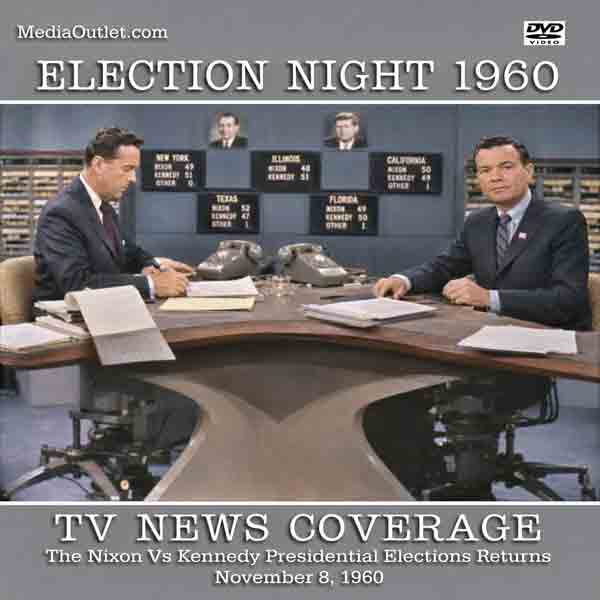
November 8, 1960: Elections: Elections In
The United States: The 1960 United States Presidential Election:
-- Democratic United States Senator John F. Kennedy defeats the
incumbent Republican Vice President Richard Nixon, the Republican
Party nominee in one of the most closely contested presidential
elections of the 20th century. The 1960 United States Presidential
Election was the 44th quadrennial presidential election. This was
the first election in which fifty states participated and the last
in which the District Of Columbia did not. It was also the first
election in which an incumbent president was ineligible to run for
a third term because of the term limits established by the 22nd
Amendment. Nixon faced little opposition in the Republican race to
succeed popular incumbent Dwight D. Eisenhower. Kennedy, a junior
U.S. Senator from Massachusetts, established himself as the
Democratic front-runner with his strong performance in the 1960
Democratic primaries, including a key victory in West Virginia
over United States Senator Hubert Humphrey. He defeated Senate
Majority Leader Lyndon B. Johnson on the first presidential ballot
of the 1960 Democratic National Convention, and asked Johnson to
serve as his running mate. The issue of the Cold War dominated the
election, as tensions were high between the United States and the
Soviet Union. Kennedy won a 303 to 219 Electoral College victory
and is generally considered to have won the national popular vote
by 112,827, a margin of 0.17 percent. Fourteen unpledged electors
from Mississippi and Alabama cast their vote for Senator Harry F.
Byrd, as did a faithless elector from Oklahoma. The 1960
presidential election was the closest election since 1916, and
this closeness can be explained by a number of factors. Kennedy
benefited from the economic recession of 1957-58, which hurt the
standing of the incumbent Republican Party, and he had the
advantage of 17 million more registered Democrats than
Republicans. Furthermore, the new votes that Kennedy, the first
Roman Catholic president, gained among Catholics almost
neutralized the new votes Nixon gained among Protestants.
Kennedy's campaigning skills decisively outmatched Nixon's, who
wasted time and resources campaigning in all fifty states while
Kennedy focused on campaigning in populous swing states. Nixon's
emphasis on his experience carried little weight for most voters.
Kennedy relied on Johnson to hold the South, and used television
effectively. Despite this, Kennedy's popular vote margin was the
narrowest in the 20th century. On November 22, 1963, Kennedy was
assassinated in Dallas, Texas and was succeeded by Johnson. Nixon
would later successfully seek the presidency in 1968 and win
reelection in 1972, but would resign in August 1974 due to the
Watergate scandal; he was succeeded by his Vice President, Gerald
Ford. On Sale Until Midnight Tonight PT!
https://store.earthstation1.com/election-night-1960-tv-news-coverage1960.html
Today's
EarthStation1.com 15% (Or More!) Off Commemorative Memorial Title:
The Age Of Ballyhoo: The 1920s With Gloria Swanson DVD, Download,
USB
Today, November 8, 2026
November 8, 1960: #DOTD: #RIP: Otto
Frederick Rohwedder, American inventor and engineer who created
the first automatic bread-slicing machine for commercial use (b.
July 7, 1928) #dies aged aged 80 in Concord, Michigan, on November
8, 1960. He was buried at Riverside Cemetery in Albion, Michigan.
On his 48th birthday, sliced bread was sold for the first time
made by the bread slicing machine inventor Otto Frederick
Rohwedder's machine for the Chillicothe Baking Company of
Chillicothe, Missouri. Otto Frederick Rohwedder was #born in
Davenport, Iowa. Sliced bread is a loaf of bread that has been
sliced with a machine and packaged for convenience, as opposed to
the consumer cutting it with a knife. It was first advertised as
"the greatest forward step in the baking industry since bread
was wrapped". By 1933, around 80% of bread sold in the US was
pre-sliced, leading to the popular idiom "greatest thing
since sliced bread". On Sale Until Midnight Tonight PT!
https://store.earthstation1.com/the-age-of-ballyhoo-dvd-1920s-documentary-gloria-swa1920.html
Today's
EarthStation1.com 15% (Or More!) Off Commemorative Memorial Title:
Alexander The Great 1956 Richard Burton Frederic March DVD MP4 USB
Today, November 8, 2026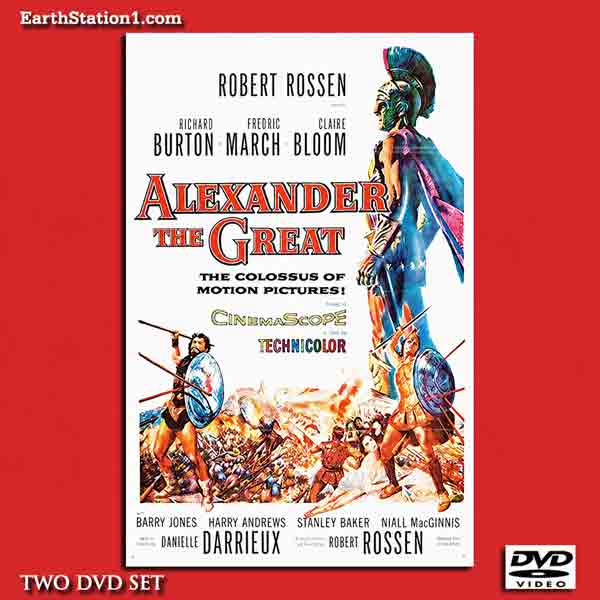
November 8, 1977: Great Discoveries:
Macedonia (Macedon): Ancient Macedonia: The Kingdom Of Macedonia:
Philip II Of Macedon: The Tomb Of Philip II Of Macedon: -- Manolis
Andronikos, Greek archaeologist and professor at The Aristotle
University Of Thessaloniki, discovers the tomb of Philip II Of
Macedon while excavating a hill called the Great Tumulus at Aigai
near modern Vergina, the capital and burial site of the kings of
Macedon. Andronikos had become convinced that The Great Tumulus
concealed the tombs of the Macedonian kings, so in 1977,
Andronikos undertook a six-week dig there and found four buried
tombs, two of which had never been disturbed. Andronikos
identified that these were the burial sites of the kings of
Macedon, including the tomb of Philip II, father of Alexander the
Great (Tomb II) and also of Alexander IV of Macedon, son of
Alexander the Great and Roxana (Tomb III). Moreover, the two
undisturbed tombs, particularly Philip II's Tomb II, contained
fabulous treasures and objects of great quality and
sophistication. Although there was much debate for some years, as
suspected at the time of the discovery Tomb II has been shown to
be that of Philip II as indicated by many features, including the
greaves, one of which was shaped consistently to fit a leg with a
misaligned tibia (Philip II was recorded as having broken his
tibia). Also, the remains of the skull show damage to the right
eye caused by the penetration of an object (historically recorded
to be an arrow), evidence that is consistent with the history of
Philip II. More recent research gives further evidence that Tomb
II contains the remains of Philip II. In 1987, the burial cluster
of the queens was also discovered there, including the tomb of
Queen Eurydice. In March 2014, five more royal tombs were
discovered in Vergina, possibly belonging to Alexander I of
Macedon and his family or to the family of Cassander of Macedon.
Some artifacts excavated at Vergina may be treated as influenced
by Asian practices or even imported from Achaemenid Persia in late
6th and early 5th centuries BC, which is during the time Macedon
was under the Persian sway. The Museum Of The Royal Tombs Of Aigai
(Vergina) is centered around these royal tombs. This underground
museum began construction in 1993 and was inaugurated in 1997.
Exhibits are presented in four connected areas, including the
Palace, the royal burial cluster of the Temenid dynasty (burial
cluster "C"), the burial cluster of Philip II , and a
gateway entrance with a semi-open-air exhibition of the sculptures
found in the city sanctuaries and the restored upper floor of the
Palace of Philip's facade. The tombs and other archaeological
sites of Aigai were inscribed on the UNESCO World Heritage List in
1996 because of its exceptional architecture and testimony to the
transition between city-states and empires in European
civilization. The collections housed in the museum are the grave
goods recovered from archaeological excavations beginning in 1861
and continue to the present day. On Sale Until Midnight Tonight
PT!
https://store.earthstation1.com/alexander-the-great-1956-richard-burton-frederic-march-dvd-mp19564.html
Today's
EarthStation1.com 15% (Or More!) Off Commemorative Memorial Title:
Presidential Campaign TV Ads 1952-1992 MP4 Video Download 4 DVD
Set
Today, November 8, 2026
November 8, 1988: Elections: Elections In
The United States: 1988 United States Presidential Election: --
Incumbent Republican Vice President George H. W. Bush defeats
Democratic nominee Michael Dukakis, Governor of Massachusetts. The
1988 United States Presidential Election was the 51st quadrennial
presidential election. This was the first presidential election
since 1948, and the most recent to date, in which a party won a
third consecutive presidential term. This also remains the most
recent election in which a candidate won over 400 electoral votes,
and the last time that the Republicans won the popular vote three
times in a row. President Ronald Reagan was ineligible to seek a
third term. Bush entered the Republican primaries as the
front-runner, defeating U.S. Senator Bob Dole and televangelist
Pat Robertson to win the nomination. He selected U.S. Senator Dan
Quayle of Indiana as his running mate. Dukakis won the Democratic
primaries after Democratic leaders such as Gary Hart and Ted
Kennedy withdrew or declined to run. He selected U.S. Senator
Lloyd Bentsen of Texas as his running mate. Bush ran an aggressive
campaign concentrated on the strong economy, reducing urban crime,
and continuing Reagan's policies. He attacked Dukakis as an
elitist "Massachusetts liberal", and Dukakis appeared to
fail to respond effectively to Bush's criticism. Despite Dukakis'
initial lead in polls, Bush pulled ahead after the Republican
National Convention and extended his lead after strong
performances in two debates. Bush won a decisive victory over
Dukakis, winning the Electoral College and the popular vote by
sizable margins. As of 2022, no candidate of either party has
since equaled or surpassed Bush's share of the electoral or
popular vote; only Bush's son George W. Bush in 2004 has won the
popular vote in a presidential election for the Republicans since,
and no Republican candidate has since won California, Illinois,
New Jersey, Maryland, Connecticut, Delaware, Vermont, or all of
Maine. Pennsylvania and Michigan did not vote Republican again
until Donald Trump won them in 2016. George H. W. Bush became the
first sitting vice president to be elected president since Martin
Van Buren in 1836. On Sale Until Midnight Tonight PT!
https://store.earthstation1.com/presidential-campaign-tv-ads-19521984-dvds-2-dual-la195219842.html
Today's
EarthStation1.com 15% (Or More!) Off Commemorative Memorial Title:
Air Bombing Vietnam & Punishing Prisoner Pilots MP4 Video
Download DVD
Today, November 8, 2026
November 8, 1931: #BOTD: #HBD! Morley
Safer, Canadian-born broadcast journalist, war correspondent,
reporter, and correspondent for CBS News (d. May 19, 2016) is
#born to an Austrian Jewish family in Toronto, Ontario. Morley
Safer was best known for his long tenure on the news magazine 60
Minutes, whose cast he joined in 1970 after its second year on
television. He was the longest-serving reporter on 60 Minutes, the
most watched and most profitable program in television history.
During his 60-year career as a broadcast journalist, Safer
received numerous awards, including twelve Emmys, a Lifetime
Achievement Emmy from the National Academy of Television Arts and
Sciences, three Overseas Press Awards, three Peabody Awards, two
Alfred I. duPont-Columbia University Awards, and the Paul White
Award from the Radio-Television News Directors Association. In
2009, Safer donated his papers to the Dolph Briscoe Center for
American History at the University of Texas at Austin. Morley
Safer died at his New York home aged 84 from pneumonia, just eight
days after announcing his retirement from 60 Minutes following 46
seasons with the show. Four days prior to his death, CBS aired a
special 60 Minutes episode covering Safer's 61-year journalism
career. Safer was laid to rest at Roselawn Avenue Cemetery in
Toronto. On Sale Until Midnight Tonight PT!
https://store.earthstation1.com/air-bombing-vietnam-amp-punishing-prisoner-pilots-mp4-video-download-dv4.html
Today's
EarthStation1.com 15% (Or More!) Off Commemorative Memorial Title:
The Weapons Of Desert Shield + Bonus Persian Gulf War DVD MP4
Download
Today, November 8, 2026
November 8, 1990: The Aftermath Of World
War II: The Cold War: The Cold War (1985-1991) (The End Of The
Cold War): The Gulf War (The Persian Gulf War, Gulf War I):
Operation Desert Shield: -- The U.S sends 100,000 more troops to
the Gulf region to support the 220,000 allied troops already
stationed in the region. Operation Desert Shield began on August
7, 1990 when US troops were sent to Saudi Arabia due also to the
request of its monarch, King Fahd, who had earlier called for US
military assistance. This "wholly defensive" doctrine
was quickly abandoned when, on August 8, Iraq declared Kuwait to
be Iraq's 19th province and Saddam named his cousin, Ali Hassan
Al-Majid, as its military-governor. The US Navy dispatched two
naval battle groups built around the aircraft carriers USS Dwight
D. Eisenhower and USS Independence to the Persian Gulf, where they
were ready by 8 August. The US also sent the battleships USS
Missouri and USS Wisconsin to the region. A total of 48 US Air
Force F-15s from the 1st Fighter Wing at Langley Air Force Base,
Virginia, landed in Saudi Arabia, and immediately commenced round
the clock air patrols of the Saudi-Kuwait-Iraq border to
discourage further Iraqi military advances. They were joined by 36
F-15 A-Ds from the 36th Tactical Fighter Wing at Bitburg, Germany.
The Bitburg contingent was based at Al Kharj Air Base,
approximately an hour south east of Riyadh. The 36th TFW would be
responsible for 11 confirmed Iraqi Air Force aircraft shot down
during the war. There were also two Air National Guard units
stationed at Al Kharj Air Base, the South Carolina Air National
Guard's 169th Fighter Wing flew bombing missions with 24 F-16s
flying 2,000 combat missions and dropping 4 million pounds of
munitions, and the New York Air National Guard's 174th Fighter
Wing from Syracuse flew 24 F-16s on bombing missions. Military
buildup continued from there, eventually reaching 543,000 troops,
twice the number used in the 2003 invasion of Iraq. Much of the
material was airlifted or carried to the staging areas via fast
sealift ships, allowing a quick buildup. On Sale Until Midnight
Tonight PT!
https://store.earthstation1.com/the-weapons-of-desert-shield-persian-gulf-war-i-dvd-mp4-download-us4.html
Today's
EarthStation1.com 15% (Or More!) Off Commemorative Memorial Title:
The March Of Time Newsreel Set 1933-46 All 3 TV Series DVD, MP4,
USB
Today, November 8, 2026
November 8, 1885: #BOTD: Tomoyuki
Yamashita, also known as Tomobumi Yamashita, Japanese general,
commander of the successful invasion of Malaya and Singapore which
victory earned him the sobriquet "The Tiger of Malaya"
(d. February 23, 1946) is #born the second son of a local doctor
in Osugi, a village in what is now part of Otoyo, Kochi
Prefecture, Shikoku. He attended military preparatory schools in
his youth. On February 23, 1946, Yamashita was executed by
hanging, having been found guilty in a controversial war crimes
trial for his troops' conduct during the Japanese defense of the
occupied Philippines in 1944. Tomoyuki Yamashita (November 8, 1885
- February 23, 1946), also called Tomobumi Yamashita, was a
Japanese general of the Imperial Japanese Army during World War
II. Yamashita led Japanese forces during the invasion of Malaya
and Battle Of Singapore, with his accomplishment of conquering
Malaya and Singapore in 70 days earning him the sobriquet "The
Tiger of Malaya" and led to the British Prime Minister,
Winston Churchill, calling the ignominious Fall Of Singapore to
Japan the "worst disaster" and "largest
capitulation" in British military history. Yamashita was
assigned to defend the Philippines from the advancing Allied
forces later in the war, and while unable to prevent the Allied
advance, he was able to hold on to part of Luzon until after the
formal Surrender of Japan in August 1945. After the war, Yamashita
was tried for war crimes committed by troops under his command
during the Japanese defense of the occupied Philippines in 1944.
In a controversial trial, Yamashita was found guilty of his
troops' atrocities even though there was no evidence that he
approved or even knew of them, and indeed many of the atrocities
were committed by troops not actually under his command. Yamashita
was sentenced to death and executed by hanging in 1946. Tomoyuki
Yamashita died aged 60 when he is executed by hanging at Los
Banos, Laguna Prison Camp, 30 miles (48 km) south of Manila,
Commonwealth of the Philippines, having been found guilty in a
controversial war crimes trial for his troops' conduct during the
Japanese defense of the occupied Philippines in 1944. He was first
buried first at the Japanese cemetery near the Los Banos Prison
Cam; his remains were later moved to Tama Cemetery, Fuchu, Tokyo.
The ruling against Yamashita - holding the commander responsible
for subordinates' war crimes as long as the commander did not
attempt to discover and stop them from occurring - came to be
known as the Yamashita standard. Command responsibility, sometimes
referred to as the Yamashita standard or the Medina standard, and
also known as superior responsibility, is the legal doctrine of
hierarchical accountability for war crimes. Yamashita's Gold, also
referred to as The Yamashita Treasure, is the name given to the
alleged war loot stolen in Southeast Asia by Imperial Japanese
forces during World War II and supposedly hidden in caves,
tunnels, or underground complexes in different cities in the
Philippines. Though there are accounts that claim the treasure
remains hidden in the Philippines and have lured treasure hunters
from around the world for over 50 years, its existence has been
dismissed by most experts. The rumored treasure was the subject of
a complex lawsuit that was filed in a Hawaiian state court in 1988
involving a Filipino treasure hunter, Rogelio Roxas, and the
former Philippine president, Ferdinand Marcos. On Sale Until
Midnight Tonight PT!
https://store.earthstation1.com/the-march-of-time-dvd-set-all-3-tv-series-19334631933467.html
Today's
EarthStation1.com 15% (Or More!) Off Commemorative Memorial Title:
DJ Madness! 1950s-60s-70s Radio Shows DVD, MP3 Download, USB Drive
Today, November 8, 2026
November 8, 1934: #BOTD: #HBD! Doc Green,
nicknamed Dock Green, baritone singer of The Drifters (d. March
10, 1989) is #born Doc Green Jr. in Harlem, New York City. Green
began singing on Harlem street corners as a youngster and joined
the Drifters sometime after it was formed in the mid-1950s. Until
then he was a member of The Five Crowns but joined when in 1958
manager George Treadwell, who owned the rights to the name
"Drifters", but had sacked the whole band, approached
Lover Patterson, the manager of The Five Crowns featuring lead
singer Ben E. King, wanting his band to adopt the appellation of
The Drifters. The singers, whose hits were to include "There
Goes My Baby," "Sweets for My Sweet," "Under
the Boardwalk," and "Up on the Roof," initially
called themselves Clyde McPhatter and the Drifters during the late
1950s. The name was later shortened to the Drifters. According to
the anthology "Who's Who in Rock," the name was used
because so many of the members "drifted" back and forth
to other groups. So the new line-up of The Drifters consisted of
Doc as baritone, Ben E King (lead tenor), Charlie Thomas (tenor),
and Elsbeary Hobbs (bass). The group went out on the road to tour
for almost a year. Since this new group had no connection to the
prior Drifters, they often played to hostile audiences. This new
Drifter lineup, widely considered the "true" golden age
of the group, released several singles with King on lead that
became chart hits. "There Goes My Baby", the first
commercial rock-and-roll recording to include a string orchestra,
was a Top 10 hit, and number 193 on Rolling Stone's 500 Greatest
Songs of All Time. "Dance with Me" followed, and then
"This Magic Moment" No.16 on the Billboard Hot 100 in
1960. "Save the Last Dance for Me" reached No.1 on the
U.S. pop charts and No.2 in the UK. This was followed by "I
Count The Tears." This version of The Drifters was inducted
into the Vocal Group Hall of Fame in 2000 as Ben E. King and the
Drifters. The original group broke up in the late 1960s, although
a variety of acts continued to use the name. His family said Green
continued working as a singer with other groups, including Vito
And The Salutations. Doc Green #died of cancer at his home in New
York, aged 54. His burial details are not publicly disclosed. On
Sale Until Midnight Tonight PT!
https://store.earthstation1.com/dj-radio-airchecks-mp3-dvd-1950s60s70s-dis319506070.html
Today's
EarthStation1.com 15% (Or More!) Off Commemorative Memorial Title:
WABC Radio Airchecks MP3 Collection 1960s-1980s DVD, MP3 Download,
USB
Today, November 8, 2026
November 8, 1942: #BOTD: #HBD! J. J.
Jackson, African American soul and R & B singer, songwriter,
and arranger, best known for the song "But It's Alright",
which he co-wrote with Pierre Tubbs, released in 1966 and then
re-released in 1969, to chart success on both occasions, is #born
Jerome Louis Jackson in Bronx, New York. His singing style is as a
belter (or yell singing, i.e. "belt out a song"),
sometimes described as "high chest voice" or "mixed
voice" due to its technique in which a singer carries their
chest voice above their break or passaggio voice (where ones voice
begins to break) with a proportion of what has generally been
referred to as head voice (where vocal resonance primarily resides
in the head). The liner notes to his 1967 album, J.J. Jackson, on
Calla Records, states that at that time he weighed 285 pounds.
========= November 8, 2019: The History Of Broadcasting: The
History Of Radio Broadasting: -- Harry Harrison is inducted into
The National Radio Hall Of Fame. Harry Harrison, popular American
radio personality, primarily in New York City, for over 50 years
(September 20, 1930 - January 28, 2020) is the only DJ to be a
WMCA "Good Guy", a WABC "All-American", and on
the WCBS-FM line-up when the New York station flipped to the
"Jack" format in June 2005. Harrison worked at WCFL as a
summer replacement, yet remained there eight months, substituting
for the permanent DJs. Harrison became program director at WPEO,
Peoria and hosted the morning show as the "Morning Mayor of
Peoria." In just six months, Harrison made WPEO the top
station. In 1959, Harrison joined WMCA, New York, as the mid-day
"Good Guy." Joe O'Brien (mornings) and Harrison gave
WMCA a "one-two punch" for over eight years. Harrison,
along with wife Patti, and children Brian Joseph ["B.J."],
Patti, Patrick, and Michael called the New York suburbs "home".
In 1965, he recorded the nationally charted holiday narration "May
You Always" on Amy Records. Other WMCA "Good Guys"
included Jack Spector, B. Mitchel Reed, Dan Daniel and Johnny
Dark, and talk show host Barry Gray. Harrison became popular with
his "Housewife Hall of Fame" feature, and participated
in the 1966 WMCA Good Guy picnic. Often, he scored the highest
ratings on WMCA. WABC program director Rick Sklar took note. In
1968, when WABC morning man Herb Oscar Anderson left the station,
Rick Sklar hired Harrison to replace him. Harrison was followed in
the WABC day by Ron Lundy. Every year, Harrison played seasonal
songs, such as his holiday greeting "May You Always" in
the winter (the Amy records single of this song made the Billboard
Christmas charts in 1965), and Allan Sherman's summer camp
novelty, "Hello Muddah, Hello Fadduh", throughout the
summer months. WABC personalities included, along with Harrison,
Charlie Greer, Scott Muni, Bob Lewis, Lundy, Johnny Donovan, Dan
Ingram, "Cousin Brucie" Bruce Morrow, Chuck Leonard, Bob
Cruz, Frank Kingston Smith, and Roby Yonge, and others. Harrison
had a number of "trademark" phrases, such as "Morning,
Mom", "Every brand new day should be unwrapped like a
precious gift", "Stay well, stay happy, stay right here"
and "Harry Harrison wishing you all the very best... because
that's exactly what you deserve!" Also, on the last day of
every year, Harrison would bring his four children to work with
him and at the end of his shift, he would join them in giving
listeners New Year's wishes. Harrison was let go from WABC as the
station changed direction in November 1979. In March 1980,
Harrison became the morning personality at WCBS-FM (101.1),
playing oldies music. In 1984, with Lundy joining the station,
they were once again heard back-to-back. Harrison would interact
with Morning Crew engineer Al Vertucci, Phil Pepe, who reported
sports, and joke about "wacky weather" and toupee
warnings with Irv "Mr. "G" Gikofsky (weather), Mary
Jane Royce, and Sue Evans. At 7:20 AM, Harrison opened the
"birthday book" and announced listener and celebrity
birthdays. On April 25, 1997 New York City Mayor Rudolph Giuliani
issued a proclamation, naming April 25 "Harry Harrison Day"
in honor of the second "Mayor." On March 19, 2003, after
a 44-year career in New York radio, Harrison left WCBS-FM, saying
"I am not retiring." His farewell to his loyal radio
friends (from 5:30 to 10:00am) was held before a live audience at
the Museum of Television and Radio in New York City. It offered
old airchecks plus guest appearances by WCBS-FM colleagues Don K.
Reed, Bobby Jay, Steve O'Brien, Randy Davis and Dan Taylor, his
replacement, as well as his son and daughter, and wife Patti.
Harrison took phone calls from Bob Shannon, Mike Fitzgerald, Ed
Baer, and Ron Lundy. Songs included Gladys Knight's "Neither
One of Us (Wants to Be the First to Say Goodbye)" and the
Little River Band's "Reminiscing," before closing with
"That's What Friends Are For." Shortly after he left
WCBS-FM, Harrison's long-time wife, Patti, who he had always
referred to as "Pretty Patti" on the air, died. Harrison
returned to WCBS-FM with a Saturday morning show in 2004. It
offered two hours of variety and two hours of Beatles music and
memories. On Memorial Day, May 30, 2005, Harry and "Cousin"
Bruce Morrow were guests on WABC Radio's annual Rewound show. Four
days later, on June 3, WCBS-FM ended its "oldies"
format, in favor of the new "Jack" format. However, as a
result of listener disapproval, the WCBS-FM Oldies format was
brought back on July 12, 2007, in a modernized form. =========
November 8, 1947: #BOTD: #HBD! Minnie Riperton, African American
singer-songwriter, best known for her 1975 single "Lovin'
You" and her five-octave vocal range, mother of actress and
comedian Maya Rudolph (d. July 12, 1979) is #born Minnie Julia
Riperton in Chicago's Bronzeville neighborhood on the South Side.
As a child, she studied music, drama, and dance at Chicago's
Lincoln Center. In her teen years, Minnie Julia Riperton Rudolph
sang lead vocals for the Chicago-based girl group, The Gems. Her
early affiliation with the legendary Chicago-based Chess Records
afforded her the opportunity to sing backup for various
established artists such as Etta James, Fontella Bass, Ramsey
Lewis, Bo Diddley, Chuck Berry, and Muddy Waters. While at Chess,
Riperton also sang lead for the experimental rock/soul group
Rotary Connection, from 1967 to 1971. She is the mother of Maya
Rudolph. Minnie Riperton died of lymphatic cancer at Cedars-Sinai
Medical Center in Los Angeles, California at 10:00 am Thursday in
the arms of her husband Richard Rudolph, aged 31. That Sunday,
July 15, following a funeral service attended by more than five
hundred mourners, Riperton was interred in the Westwood Village
Memorial Park Cemetery in Los Angeles. Her epitaph is the opening
line of her most famous song: "Lovin' you is easy 'cause
you're beautiful". Stevie Wonder paid tribute to Riperton
during an episode of the TV show Soul Train, which aired shortly
after her death in September 1979. On Sale Until Midnight Tonight
PT!
https://store.earthstation1.com/wabc-musicradio-shows-mp3-dvd-60s80s-am-360807775.html
Today's
EarthStation1.com 15% (Or More!) Off Commemorative Memorial Title:
TV Commercials: The Mego Toy Classics DVD, MP4 Download, USB Drive
Today, November 8, 2026
November 8, 1931: #BOTD: #HBD! Darla
Hood, American child actress who as an adult performed as a singer
in nightclubs and on television, best known as the female lead in
the Our Gang series from 1935 to 1941 (d, June 13, 1979) is #born
Darla Jean Hood in Leedey, Oklahoma, the only child of music
teacher Elizabeth Davner, and James Claude Hood, who worked in a
bank. Her mother introduced her to singing and dancing at an early
age, taking her to lessons in Oklahoma City. Just after her third
birthday she was taken to New York City, where she was seen by Joe
Rivkin, a casting director for Hal Roach Studios, who arranged a
screen test. She was hired and went to Culver City, California, to
appear in the Our Gang series. Hood used her real name in the
series except for her debut, in which her character's name was
"Cookie". She made her debut at age four in the 1935
film Our Gang Follies of 1936 and was soon given a role in The
Bohemian Girl with Laurel and Hardy. From 1935 through 1941, she
continued to play in Our Gang. She is well remembered for her
coquettish character, typically the love interest of Alfalfa,
Butch, or (occasionally) Waldo. One of her most memorable moments
was singing "I'm in the Mood for Love" in The Pinch
Singer. Hood's final Our Gang appearance was at age 10 in 1941's
Wedding Worries. When she outgrew her role in Our Gang, Hood
appeared in several other movies and attended school in Los
Angeles. While at Fairfax High School, she organized a vocal group
called the Enchanters with four boys. Shortly after graduation,
the quintet was booked by producer and vaudeville star Ken Murray
for his famous "Blackouts", a stage variety show. The
group remained with Murray's Blackouts during its long run in New
York City and Hollywood. Hood went solo with singing engagements
in nightclubs and guest appearances on TV. The deep, rich voice
she developed as an adult was a striking contrast to the child
singing most of the public remembered. She was a regular on The
Ken Murray Show from 1950 to 1951. In 1955, she was a leading lady
in the act of ventriloquist Edgar Bergen. In 1957, Hood was a
regular performer on The Merv Griffin Show for the American
Broadcasting Network. Other credits that year include a hit
record, "I Just Wanna Be Free." and a duet with Johnny
Desmond in the Sam Katzman movie Calypso Heat Wave. Between 1959
and 1962, she recorded several singles for the small Ray Note and
Acama labels. In January 1959, Hood released a new record, "My
Quiet Village" (Ray Note Records). Joe Rivkin, who discovered
her as a child, saw the cover and cast her in her final film role
-her first adult role in a movie- playing a secretary in the
suspense drama The Bat with Vincent Price and Agnes Moorehead. In
2018, along with Hood's recording of "Silent Island,"
"My Quiet Village" was re-released by The Numero Group
both on the Exotica compilation Technicolor Paradise: Rhum
Rhapsodies & Other Exotic Delights and on Silent Island, a
digital-download-only retrospective of Hood's vocal music. Hood
was a guest on such TV shows of the early 1960s as You Bet Your
Life and The Jack Benny Program, where she appeared on October 30,
1962 as "Darla" in a spoof of the Our Gang comedies with
Jack Benny (who appeared as Alfalfa), and The Charlotte Peters
Show in St. Louis. She did singing and voice-over on TV
commercials, which included Campbell's Soup and Chicken of the Sea
tuna. She was also featured in The Little Rascals Christmas
Special (1979) as the voice of Spanky and Porky's mother. She
appeared in her own nightclub act at the Coconut Grove in Los
Angeles, the Copacabana in New York, and the Sahara Hotel and
Casino in Las Vegas, Nevada. Hood was married twice, first to
singer and insurance salesman Robert W. Decker (1949-1957), then
to record-company executive Jose Granson (1957-1979). She and
Granson had three children. Tommy "Butch" Bond mentioned
that her marriage to Granson was difficult because he used a
wheelchair following a stroke. Darla Hood died unexpectedly of
heart failure in North Hollywood, California at age 47. An autopsy
disclosed that Hood had contracted Hepatitis from a contaminated
blood transfusion given during an appendectomy at Canoga Park
Hospital, Canoga Park, California. Hood was busy organizing the
1980 Little Rascals reunion for the Los Angeles chapter of The
Sons of the Desert when she underwent the surgery. Hood's funeral
was held on June 18 at Pierce Brothers Mortuary chapel and
attended by approximately 150 relatives and friends, including
former Our Gang cast members Micki "Happy" Laughlin and
Matthew "Stymie" Beard as well as Lucille Prin (wife of
Hal Roach). Dr. Kenneth Watson of Hollywood United Methodist
Church delivered the eulogy, sharing personal messages from Hood's
mother, Elizabeth Liberatore, and her daughter, Darla Jo Granson.
Hood's husband, Jose Granson; her stepfather; daughter; and
stepdaughter Robin were present, though her son Brett was unable
to attend. Hood's mother was unable to attend due to the emotional
difficulty of the occasion. Upon learning of Hood's death, fellow
Our Gang member Billie "Buckwheat" Thomas said "I
hate to hear it. It's a shock. She was an awfully nice person, a
fine woman. We got along real good as kids." Thomas died a
little over a year later. On Sale Until Midnight Tonight PT!
https://store.earthstation1.com/tv-commercials-the-mego-toy-classics-dvd.html
Today's
EarthStation1.com 15% (Or More!) Off Commemorative Memorial Title:
Patti Page Music TV Shows DVD, MP4 Video Download, USB Flash Drive
Today, November 8, 2026
November 8, 1927: #BOTD: #HBD! Patti
Page, American singer and actress (d. January 1, 2013) is #born
Clara Ann Fowler in Claremore, Oklahoma (some sources give
Muskogee, Oklahoma) into a large and poor family of 11 children (3
boys and 8 girls). She was a singer of traditional pop music and
country music. She was the top-charting female vocalist and
best-selling female artist of the 1950s, selling over 100 million
records during a six-decade long career. She was often introduced
as "the Singin' Rage, Miss Patti Page". New York WNEW
disc-jockey William B. Williams introduced her as "A Page in
my life called Patti". Page signed with Mercury Records in
1947, and became their first successful female artist, starting
with 1948's "Confess". In 1950, she had her first
million-selling single "With My Eyes Wide Open, I'm
Dreaming", and would eventually have 14 additional
million-selling singles between 1950 and 1965. Page's signature
song, Tennessee Waltz, was one of the biggest-selling singles of
the 20th century, and is recognized today as one of the official
songs of the state of Tennessee. It spent 13 weeks atop the
Billboard magazine's Best-Sellers List in 1950. Page had three
additional No. 1 hit singles between 1950 and 1953, "All My
Love (Bolero)", "I Went to Your Wedding", and "(How
Much Is That) Doggie in the Window". Unlike most other pop
music singers, Page blended country music styles into many of her
most popular songs. As a result of this crossover appeal, many of
Page's singles appeared on the Billboard Country Chart. Towards
the 1970s, she shifted her career towards country music and began
having greater success on its charts, ending up one of the few
vocalists to have made them in five separate decades. With the
rise of Rock and Roll in the second half of the 1950s, traditional
pop music began to wane. Page was among a small number of
traditional pop music singers able to sustain success, continuing
to have major hits into the mid-1960s with "Old Cape Cod,"
"Allegheny Moon," "A Poor Man's Roses (Or a Rich
Man's Gold)," and "Hush, Hush, Sweet Charlotte." In
1997, Patti Page was inducted into the Oklahoma Music Hall of
Fame. Patti Page died at the Seacrest Village Retirement Community
in Encinitas, California, at the age of 85; she had been suffering
from heart and lung disease. She is buried at El Camino Memorial
Park in San Diego. She was posthumously honored with the Lifetime
Achievement Grammy Award in 2013. On Sale Until Midnight Tonight
PT!
https://store.earthstation1.com/patti-page-music-television-shows-dvd.html
Today's
EarthStation1.com 15% (Or More!) Off Commemorative Memorial Title:
Ethnic Notions + The Mammy Legend: Black Stereotypes DVD MP3 USB
Drive
Today, November 8, 2026
November 8, 1920: #BOTD: #HBD! Esther
Rolle, African American actress and dancer, best known for her
role as Florida Evans on the CBS television sitcom Maude for two
seasons (1972-1974), and its spin-off series Good Times, for five
seasons (1974-77, 1978-79), for which Rolle was nominated for a
Golden Globe Award for Best Actress - Television Series Musical or
Comedy in 1976 (d. November 17, 1998) is #born Esther Elizabeth
Rolle in Pompano Beach, Florida to Bahamian immigrants. Rolle was
a member of Asadata Dafora's dance troupe, Shogolo Oloba (later
renamed the Federal Theater African Dance Troupe). She became the
troupe's director in 1960, and they became of fixture of the
Harlem cultural scene during the early 1960s, often performing in
front of Lewis H. Michaux's African National Memorial Bookstore,
and before and after lectures by Malcolm X. Rolle's earliest roles
were on the stage; her New York stage debut was in the 1962 play
The Blacks. She was often cast in plays produced by Robert Hooks
and the Negro Ensemble Company. She also appeared in productions
of The Crucible and Blues for Mr. Charlie. Rolle's most prominent
early role was as Miss Maybell in the Melvin Van Peebles musical
film Don't Play Us Cheap, and it's subsequent stage adaptation. In
1977, Rolle portrayed Lady Macbeth in Orson Welles'
Haitian-influenced version of William Shakespeare's Macbeth at the
Henry Street New Federal Theater in Manhattan. In 1979, Rolle
accepted the Emmy Award for Outstanding Supporting Actress in a
Limited Series or Special for the television film Summer of My
German Soldier. Esther Rolle died in Culver City, California from
complications of diabetes, nine days after her 78th birthday. A
devout member of the African Methodist Episcopal Church, Rolle
requested that her funeral be held at Bethel African Methodist
Episcopal Church in her hometown of Pompano Beach, Florida,
located at what is now 405 Northwest Esther Rolle Avenue. She is
buried in Westview Community Cemetery also in Pompano Beach, a
historically black burial ground created in 1952 when the laws and
customs of Florida did not permit white people and black people to
be buried in the same cemetery. On Sale Until Midnight Tonight PT!
https://store.earthstation1.com/ethnic-notions-africanamerican-stereotypes-dvd.html
Today's
EarthStation1.com 15% (Or More!) Off Commemorative Memorial Title:
The Scarlett O'Hara War 1980 Tony Curtis Bill Macy DVD, Download,
USB
Today, November 8, 2026
November 8, 1900: #BOTD: Margaret
Mitchell, American novelist and journalist who wrote only one
novel, the American Civil War-era novel Gone With The Wind, for
which she won the National Book Award for Fiction for Most
Distinguished Novel of 1936 and the Pulitzer Prize for Fiction in
1937 (d. August 16, 1949) is #born Margaret Munnerlyn Mitchell in
Atlanta, Georgia. Long after her death, a collection of Mitchell's
girlhood writings and a novella she wrote as a teenager, titled
Lost Laysen, were published. A collection of newspaper articles
written by Mitchell for The Atlanta Journal was republished in
book form. Margaret Mitchell died when struck by a speeding drunk
driver in the city of her birth, Atlanta, aged 48. She is buried
at Oakland Cemetery in Atlanta, Georgia. On Sale Until Midnight
Tonight PT!
https://store.earthstation1.com/the-scarlett-o39hara-war-tv-movie-19391980.html
Today's
EarthStation1.com 15% (Or More!) Off Commemorative Memorial Title:
The Eleanor Roosevelt Story 1965 Biographical Film DVD, Download,
USB
Today, November 8, 2026
November 8, 1962: Flag Practices: The
United States Flag Code: Acknowledgements Of Death: Executive
Orders Of John F. Kennedy: Half-Staff Executive Order In
Observance Of The Death Of Eleanor Roosevelt: -- President John F.
Kennedy orders all United States flags lowered to half-staff
throughout the world in tribute to Eleanor Roosevelt immediately
following her November 7, 1962 death. The order comes on the the
thirtieth anniversary of her husband's first election as
president, and thereby, the thirtieth anniversary of her first
becoming First Lady. Eleanor Roosevelt, American political figure,
diplomat, activist, humanitarian and politician, 39th First Lady
of the United States (b. 1884) had died of cardiac failure brought
on by a dormant case of tuberculosis in her bone marrow at the age
of 78 at her Manhattan home at 55 East 74th Street on the Upper
East Side. In April 1960, Roosevelt was diagnosed with aplastic
anemia soon after being struck by a car in New York City, and when
she was given steroids to treat it 1962, it activated her dormant
tuberculosis. Born Anna Eleanor Roosevelt in Manhattan, in New
York City, she served as the First Lady of the United States from
March 4, 1933, to April 12, 1945, during her husband President
Franklin D. Roosevelt's four terms in office, making her the
longest-serving First Lady of the United States. Roosevelt served
as United States Delegate to the United Nations General Assembly
from 1945 to 1952. President Harry S. Truman later called her the
"First Lady of the World" in tribute to her human rights
achievements. Roosevelt was a member of the prominent American
Roosevelt and Livingston families and a niece of President
Theodore Roosevelt. She had an unhappy childhood, having suffered
the deaths of both parents and one of her brothers at a young age.
At 15, she attended Allenwood Academy in London and was deeply
influenced by its headmistress Marie Souvestre. Returning to the
U.S., she married her fifth cousin once removed, Franklin Delano
Roosevelt, in 1905. The Roosevelts' marriage was complicated from
the beginning by Franklin's controlling mother, Sara, and after
Eleanor discovered her husband's affair with Lucy Mercer in 1918,
she resolved to seek fulfillment in leading a public life of her
own. She persuaded Franklin to stay in politics after he was
stricken with a paralytic illness in 1921, which cost him the
normal use of his legs, and began giving speeches and appearing at
campaign events in his place. Following Franklin's election as
Governor of New York in 1928, and throughout the remainder of
Franklin's public career in government, Roosevelt regularly made
public appearances on his behalf, and as First Lady, while her
husband served as president, she significantly reshaped and
redefined the role of First Lady. Though widely respected in her
later years, Roosevelt was a controversial First Lady at the time
for her outspokenness, particularly on civil rights for African
Americans. She was the first presidential spouse to hold regular
press conferences, write a daily newspaper column, write a monthly
magazine column, host a weekly radio show, and speak at a national
party convention. On a few occasions, she publicly disagreed with
her husband's policies. She launched an experimental community at
Arthurdale, West Virginia, for the families of unemployed miners,
later widely regarded as a failure. She advocated for expanded
roles for women in the workplace, the civil rights of African
Americans and Asian Americans, and the rights of World War II
refugees. Following her husband's death in 1945, Roosevelt
remained active in politics for the remaining 17 years of her
life. She pressed the United States to join and support the United
Nations and became its first delegate. She served as the first
chair of the UN Commission on Human Rights and oversaw the
drafting of the Universal Declaration of Human Rights. Later, she
chaired the John F. Kennedy administration's Presidential
Commission on the Status of Women. By the time of her death,
Roosevelt was regarded as "one of the most esteemed women in
the world"; The New York Times called her "the object of
almost universal respect" in an obituary. In 1999, she was
ranked ninth in the top ten of Gallup's List of Most Widely
Admired People of the 20th Century. On Sale Until Midnight Tonight
PT!
https://store.earthstation1.com/the-eleanor-roosevelt-story-dvd-1965-macleish-seva1965.html
Today's
EarthStation1.com #OnThisDay Commemorative Memorial Title: An
Evening With Professor Irwin Corey CD, MP3 Download, USB Drive
Today, November 8, 2026 November 8: Abet And Aid Punsters Day: --
When all of us are experiencing withdrawals from October
festivities, we need to aid and abet those punsters who comes to
the rescue with poor jokes and terrible puns. The day encourages
us to loosen up and laugh with each other. It is a celebration
dedicated to laughter and making each other laugh with jokes,
puns, and pranks. Sometimes the best way to cheer up is by
indulging in silly or dad jokes. Instead of rolling your eyes at
yet another bad pun, laugh along and come up with original punny
jokes! Though there is no real proof of when and how Abet and Aid
Punsters Day came about, enthusiasts believe that the day might
have originated in the 1970s. As we already know, Abet and Aid
Punsters Day was created with the simple aim of sharing jokes and
laughing together. Punsters hope that everyone will join in the
celebrations and forget their worries for a day. We all know what
puns are, but have you ever wondered about their linguistic
nuances? The pun, also known as paronomasia, is a form of wordplay
that lends multiple meanings to a term or similar-sounding words
to deliver a humorous or rhetorical effect. One can do this by
intentionally using homophonic, homographic, metonymic, or
figurative language. A pun must always have correct or fairly
reasonable interpretations and can be in-jokes or idiomatic
constructions. Their meanings may be specific to a particular
language or culture. Puns have a long history in human writing;
for example, the Roman playwright Plautus was famous for his puns
and word games. Puns originated in ancient Egypt, where the
Egyptians used them to develop myths and interpret dreams. In Shen
Dao, China, they used puns for communicating royal decrees. In
ancient Mesopotamia, around 2500 B.C., punning was used by scribes
to represent words in cuneiform. Interestingly, the Hebrew Bible
contains puns too! The Mayans also used puns in their hieroglyphic
writing and their modern languages. As you might have guessed by
now, humans have always enjoyed a good pun.
https://store.earthstation1.com/an-evening-with-professor-irwin-corey-comedy-mp3-c3.html
Today's
EarthStation1.com #OnThisDay Commemorative Memorial Title:
Vietnam: The Ten Thousand Day War TV Series DVD, Video Download,
USB
Today, November 8, 2026November 8, 1927: #BOTD: Nguyen Khanh,
South Vietnamese general and politician who served in various
capacities as head of state and prime minister of South Vietnam
while at the head of a military junta from January 1964 until
February 1965 (d. January 11, 2013) is #born in Tra Vinh in the
Mekong Delta region in the far south of Vietnam. He was involved
in or against many coup attempts, failed and successful, from 1960
until his defeat and exile from South Vietnam in 1965. Nguyen
Khanh lived out his later years with his family, in exile in the
United States, and died of pneumonia and end-stage renal failure
at a hospital in San Jose, California, aged 83. His burial details
are not publicly disclosed.
https://store.earthstation1.com/vietnam-the-10000-day-war-4-dual-layer-dvds-all-13-10000413.html
Today's
EarthStation1.com #OnThisDay Commemorative Memorial Title:
Monster: A Portrait Of Stalin In Blood TV Series DVD, Download,
USB
Today, November 8, 2026November 8, 1986: #DOTD: Vyacheslav
Molotov, Soviet Russian politician and diplomat, Soviet Minister
of Foreign Affairs (b. March 9, 1890) #dies at Kuntsevo Hospital
in Moscow, Russian SFSR, Soviet Union during the rule of Mikhail
Gorbachev, aged 96; Molotov had suffered and survived seven
previous heart attacks. At the time of his death, he was the last
surviving major participant in the events of 1917. He is buried in
the Novodevichy Cemetery in Moscow. Vyacheslav Molotov was born
Vyacheslav Mikhailovich Skryabin in the village of Kukarka,
Yaransk Uyezd, Vyatka Governorate (now Sovetsk, Kirov Oblast), the
son of a merchant. Contrary to a commonly-repeated error, he was
not related to the composer Alexander Scriabin. Throughout his
teenager years, he was described as "shy" and "quiet"
and always assisted his father with his business. Vyacheslav
Mikhailovich Molotov was an Old Bolshevik, and a leading figure in
the Soviet government from the 1920s, when he rose to power as a
protege of Joseph Stalin. Molotov served as Chairman of the
Council of People's Commissars (Premier) from 1930 to 1941, and as
Minister of Foreign Affairs from 1939 to 1949 and from 1953 to
1956. He served as First Deputy Premier from 1942 to 1957, when he
was dismissed from the Presidium of the Central Committee by
Nikita Khrushchev. The Molotov cocktail is a term coined by the
Finns during the Winter War of 1939-1940, as a generic name used
for a variety of improvised incendiary weapons. Molotov retired in
1961 after several years of obscurity. Molotov was the principal
Soviet signatory of the Nazi-Soviet non-aggression pact of 1939
(also known as the Molotov-Ribbentrop Pact), whose most important
provisions were added in the form of a secret protocol that
stipulated an Invasion Of Poland and partition of its territory
between Nazi Germany and the Soviet Union. He was aware of the
Katyn massacre committed by the Soviet authorities during this
period. After World War II (Great Patriotic War), Molotov was
involved in negotiations with the Western allies, in which he
became noted for his diplomatic skills. He retained his place as a
leading Soviet diplomat and politician until March 1949, when he
fell out of Stalin's favour and lost the foreign affairs ministry
leadership to Andrei Vyshinsky. Molotov's relationship with Stalin
deteriorated further, with Stalin criticising Molotov in a speech
to the 19th Party Congress. However, after Stalin's death in 1953,
Molotov was staunchly opposed to Khrushchev's de-Stalinisation
policy. Molotov defended Stalin's policies and legacy until his
death in 1986, and harshly criticised Stalin's successors,
especially Khrushchev.
https://store.earthstation1.com/monster-a-portrait-of-stalin-in-blood-dvd-tv-series-2-disc2.html
Today's
EarthStation1.com #OnThisDay Commemorative Memorial Title: In
Search Of Dracula 1975 Christopher Lee DVD, MP4 Download, USB
Drive
Today, November 8, 2026November 8, 1847: #BOTD: #HBD! Bram
Stoker, Irish novelist and critic, best known for writing the 1897
Gothic horror novel Dracula (d. April 20, 1912) is #born Abraham
Stoker at 15 Marino Crescent, Clontarf, on the northside of
Dublin, Ireland. During his lifetime, he was better known as the
personal assistant of actor Sir Henry Irving and business manager
of the West End's Lyceum Theatre, which Irving owned. In his early
years, Stoker worked as a theatre critic for an Irish newspaper,
and wrote stories as well as commentaries. He also enjoyed
travelling, particularly to Cruden Bay in Scotland where he set
two of his novels. During another visit to the English coastal
town of Whitby, Stoker drew inspiration for writing Dracula. He
died of locomotor ataxia (the inability to precisely control one's
own bodily movements) in Pimlico, London, England, aged 64; his
death certificate listed the cause of death as "Locomotor
ataxia 6 months", presumed to be a reference to syphilis. He
was cremated, and his ashes were placed in a display urn at
Golders Green Crematorium in north London. Since his death, his
magnum opus Dracula has become one of the best-known works in
English literature, and the novel has been adapted for numerous
films, short stories, and plays.
https://store.earthstation1.com/in-search-of-dracula-1975-documentary-starring-christopher1975.html
Today's
EarthStation1.com #OnThisDay Commemorative Memorial Title: The
Great Depression 7 Part Documentary Series MP4 Video Download DVD
Today, November 8, 2026November 8, 1933: The Interwar Period
(The Aftermath Of World War I, The Interbellum, Between The Wars):
The Great Depression: The Great Depression In The United States:
The New Deal: The First New Deal (1933-1934): New Deal Agencies:
The Federal Emergency Relief Administration (FERA): The Civil
Works Administration (CWA): -- US President Franklin D. Roosevelt
unveils the Civil Works Administration (CWA), an organization
designed to rapidly create jobs for more than four million
unemployed. The jobs were merely temporary, for the duration of
the hard winter of 1933-34. President Franklin D. Roosevelt
unveiled the CWA on November 8, 1933, and put Harry L. Hopkins in
charge of the short-term agency. The CWA was a project created
under the Federal Emergency Relief Administration (FERA). The CWA
created construction jobs, mainly improving or constructing
buildings and bridges. It ended on March 31, 1934, after spending
200M USD a month and giving jobs to four million people.
https://store.earthstation1.com/grde7padosem.html
Today's
EarthStation1.com #OnThisDay Commemorative Memorial Title: Civil
Jets The Boeing 707 C135 Stratolifter KC135 Tanker DVD, MP4, USB
Today, November 8, 2026November 8, 1965: Aviation: The History
Of Aviation: The History Of Civil Aviation: Aviation Incidents And
Accidents: American Airlines Flight 383 (1965): -- American
Airlines Flight 383, a nonstop Boeing 727 flight from New York
City to Cincinnati with 57 passengers, and 5 crew on board,
crashes in Constance, Kentucky on final approach to the
Cincinnati/Northern Kentucky International Airport located in
Hebron, Kentucky, killing 58. Only three passengers and one flight
attendant survived the accident. The Civil Aeronautics Board (CAB)
concluded that the aircraft was working normally and fully under
the control of the pilots at the time of the crash. The flight
data recorder showed the aircraft descended through 500 feet (150
m) in the last 42 seconds before impact, a normal rate of descent
for the landing phase of operation. The CAB determined that the
probable cause of the accident was the pilots' failure to properly
monitor their altitude during a visual approach into deteriorating
weather conditions. It was later believed that the following
factors might have contributed to the crash: 1): Lights from the
houses in the Ohio River valley, located 400 feet (120 m) below
the altitude of the airport, may have conveyed an illusion of
runway lights; 2) The flight crew may have been confused about
their true altitude, due to misinterpretation of the aircraft's
drum-type altimeter after descending through 0 feet (relative to
the airport altitude), or they may have had their hands full
controlling the plane in severe weather and simply failed to
notice the readings on the altimeter; 3) A late departure from New
York and the deteriorating weather at Cincinnati may have put
pressure on the flight crew; and 4): Despite the rapidly
deteriorating weather conditions, the flight crew chose to make a
visual approach to the runway.
https://store.earthstation1.com/civil-jets-the-boeing-707-c135-stratolifter-kc135-t707135135.html
Today's
EarthStation1.com #OnThisDay Commemorative Memorial Title: The
Confession AKA L'aveu (1970) Yves Montand DVD, Download, USB Drive
Today, November 8, 2026November 8, 1986: #DOTD: #RIP: Artur
London, Czechoslovak communist politician and co-defendant in the
Slansky Trial of 1952 (b. February 1, 1915) #dies in Paris,
France, aged 71. He is buried along with his wife Lise, in the PCF
(French Communist Party) plot at Ivry Cemetery in Ivry-sur-Seine
in the southeastern suburbs of Paris. A committed leftist, he was
a defendant in the Slansky Trial, the 1952 antisemitic show trial
against fourteen Communist Party Of Czechoslovakia members known
as the so-called Anti-Trotskyite Trials. Though London was
sentenced to life in prison, he was freed in 1955. He then settled
in France with his wife Lise London, a French communist he had met
in Moscow. The couple wrote the book L'Aveu (1968), an
autobiographical account of his ordeal in the Prague Trials. The
English translation The Confession by Alastair Hamilton appeared
in 1968. (In the United Kingdom, the translation was published in
1970 under the title On Trial). While the main defendants were
senior to London, he gained prominence worldwide by writing the
book. The book resonated internationally, and was adapted by
Costa-Gavras as the French-Italian movie of the same name starring
Yves Montand and Simone Signoret which premiered on April 29,
1970. Chris Marker made the short film On vous parle de Prague: Le
deuxieme proces d'Artur London, an on-set documentary about the
making of this movie. Artur London was born in Ostrava, Moravia,
Austria-Hungary (now Czech Republic) into a Jewish family. London
spent 1934 to 1937 in Moscow. In 1937, during the Spanish Civil
War, he left for Barcelona where he worked for SIM (Servicio de
Informacion Militar), an intelligence service run by the Soviet
NKVD. He moved to France after the defeat of the Republicans. In
World War II, he was active in the French resistance, was arrested
by the Nazis and sent to the Mauthausen concentration camp. After
the war, he lived in Switzerland but soon moved with family to
Prague, where he became a leading figure in the Communist Party of
Czechoslovakia and was eventually nominated deputy minister of
foreign affairs in 1948. In 1951, he was arrested and became a
co-defendant with Rudolf Slansky in the Slansky Trial, one of
several show trials against Eastern European communists at the
time. Accused of being a Zionist, Trotskyite and Titoist, he was
forced to confess and sentenced to life in prison. After the
Slansky Trial, London collaborated with the authorities and served
as a lead witness in other construed political processes against
top Czechoslovak communists, such as Eduard Goldstucker, Josef
Pavel, Osvald Zavodsky, Gustav Husak, Otakar Hromadko and others.
Following Joseph Stalin's death in 1953, London was released in
1955. After his rehabilitation in 1963, he moved to France with
his wife, Lise London. In 1963, London published Espagne, a book
about his time in the Spanish civil war. Lise later narrated the
2002 documentary A Trial in Prague, directed by Zuzana Justman.
https://store.earthstation1.com/the-confession-aka-l39aveu-dvd-1970-yves-montand-simone-si391970.html
Today's
EarthStation1.com #OnThisDay Commemorative Memorial Title: The
Romantic Spirit TV Series DVD, Video Download, USB Flash Drive
Today, November 8, 2026November 8, 1674: #DOTD: #RIP: John
Milton, English poet and philosopher, man of letters and civil
servant for the Commonwealth of England under Oliver Cromwell,
best known for his epic blank verse poem Paradise Lost (b.
December 9, 1608) #dies aged 65 at Bunhill Row, London, England.
Sources differ as to whether the cause of death was consumption or
gout. He is buried in the church of St Giles-Without-Cripplegate,
Fore Street, London. According to an early biographer, his funeral
was attended by "his learned and great Friends in London, not
without a friendly concourse of the Vulgar." A monument was
added in 1793, sculpted by John Bacon the Elder. John Milton was
born in London on December 9, 1608 in Bread Street, London, the
son of composer John Milton and his wife Sarah Jeffrey. The senior
John Milton (1562-1647) moved to London around 1583 after being
disinherited by his devout Catholic father Richard "the
Ranger" Milton for embracing Protestantism. John Milton wrote
at a time of religious flux and political upheaval, and is best
known for his epic poem Paradise Lost (1667), written in blank
verse. Milton' poetry and prose reflect deep personal convictions,
a passion for freedom and self-determination, and the urgent
issues and political turbulence of his day. Writing in English,
Latin, Greek, and Italian, he achieved international renown within
his lifetime, and his celebrated Areopagitica (1644), written in
condemnation of pre-publication censorship, is among history' most
influential and impassioned defences of free speech and freedom of
the press. On April 27, 1667 Milton, blind and impoverished, sold
the copyright of Paradise Lost for 10 pounds sterling. Considered
second only to Shakespeare in importance, his works include
Paradise Lost, Paradise Regained, Samson Agonistes, the pamphlets
Of Reformation Touching Church Discipline, The Doctrine and
Discipline of Divorce, The Tenure of Kings and Magistrates and Pro
Populo Anglicano.
https://store.earthstation1.com/the-romantic-spirit-tv-series-all-14-episodes-5-dual-layer-d145.html
Today's
EarthStation1.com #OnThisDay Commemorative Memorial Title: The
Marble Hunter: Charles Fellows In Turkey MP4 Video Download DVD
Today, November 8, 2026November 8, 1860: #DOTD: #RIP: Charles
Fellows, British archaeologist and explorer, known for his
numerous expeditions in what is present-day Turkey (b. August 31,
1799) #dies in London, England aged 61. He is buried on the
western side of Highgate Cemetery in north London, England. Sir
Charles Fellows was born at High Pavement, Nottingham, the fifth
son of John Fellows, a wealthy silk merchant and banker, and his
wife Sarah. When fourteen he drew sketches to illustrate a trip to
the ruins of Newstead Abbey, which afterwards appeared on the
title-page of Moore's Life of Lord Byron. In 1820 he settled in
London, where he became an active member of the British
Association. In 1827 he discovered the modern ascent of Mont
Blanc. After the death of his mother in 1832 he passed the greater
portion of his time in Italy, Greece and the Levant. The numerous
sketches he executed were largely used in illustrating Childe
Harold. In 1838 he went to Asia Minor, making Smyrna his
headquarters. His explorations in the interior and the south led
him to districts practically unknown to Europeans, and he thus
discovered ruins of a number of ancient cities. He entered Lycia
and explored the Xanthus from the mouth at Patara upwards. Nine
miles from Patara he discovered the ruins of Xanthus, the ancient
capital of Lycia, finely situated on hills, and abounding in
magnificent remains. About 15 miles farther up he came upon the
ruins of Tlos. After taking sketches of the most interesting
objects and copying a number of inscriptions, he returned to
Smyrna through Caria and Lydia. The publication in 1839 of A
Journal written during an Excursion in Asia Minor roused such
interest that Lord Palmerston, at the request of the British
Museum authorities, asked the British consul at Constantinople to
obtain a firman from the sultan to export a number of the Lycian
works of art to England. Having obtained the firman, Fellows,
under the auspices of the British Museum, again set out for Lycia
in late 1839. He was accompanied by the painter George Scharf, who
assisted him by sketching the expedition. This second visit
resulted in the discovery of thirteen ancient cities, chief among
them Xanthos. He made a further trip in 1841. Fellows led the
archaeological excavation of Xanthos and other Lycian cities in
Asia Minor and shipped an enormous amount of antique monuments to
England, where they may be seen today in the British Museum. They
include reliefs from the Harpy Tomb and the Nereid Monument,
amongst many others. In 1841, he published An Account of
Discoveries in Lycia, being a Journal kept during a Second
Excursion in Asia Minor. Three years later he presented to the
British Museum his portfolios, accounts of his expeditions, and
specimens of natural history illustrative of Lycia. In 1845, he
was knighted as an acknowledgment of his services in the removal
of the Xanthian antiquities to Britain. Fellows paid his own
expenses in all his journeys and received no financial reward for
his endeavors. Fellows was married twice.
https://store.earthstation1.com/the-marble-hunter-charles-fellows-in-turkey-mp4-video-download-dv4.html
Today's
EarthStation1.com #OnThisDay Commemorative Memorial Title: Norman
Rockwell: An American Portrait DVD, Video Download, USB Drive
Today, November 8, 2026November 8, 1978: #DOTD: #RIP: Norman
Rockwell, American painter, illustrator and author, whose works
have a broad popular appeal in the United States for their
reflection of American culture, best known for his famous cover
illustrations of everyday life he created for The Saturday Evening
Post magazine over nearly five decades (b. February 3, 1894) #dies
of emphysema at age 84 in his Stockbridge, Massachusetts, home.
First Lady Rosalynn Carter attended his funeral. He is buried at
Stockbridge Cemetery in Stockbridge, Massachusetts. Norman
Perceval Rockwell was born in New York City. Among the best-known
of Rockwell's works are the Willie Gillis series, Rosie the
Riveter, The Problem We All Live With, Saying Grace, and the Four
Freedoms series. He also is noted for his 64-year relationship
with the Boy Scouts of America (BSA), during which he produced
covers for their publication Boys' Life, calendars, and other
illustrations. These works include popular images that reflect the
Scout Oath and Scout Law such as The Scoutmaster, A Scout is
Reverent and A Guiding Hand, among many others. Norman Rockwell
was a prolific artist, producing more than 4,000 original works in
his lifetime. Rockwell also was commissioned to illustrate more
than 40 books, including Tom Sawyer and Huckleberry Finn as well
as painting the portraits for Presidents Eisenhower, Kennedy,
Johnson, and Nixon, as well as those of foreign figures, including
Gamal Abdel Nasser and Jawaharlal Nehru. One of his last portraits
was of Colonel Sanders in 1973. He painted six images for
Coca-Cola advertising. Rockwell's work was dismissed by serious
art critics in his lifetime. Many of his works appear overly sweet
in the opinion of modern critics, especially the Saturday Evening
Post covers, which tend toward idealistic or sentimentalized
portrayals of American life. This has led to the often-deprecatory
adjective, "Rockwellesque". Consequently, Rockwell is
not considered a "serious painter" by some contemporary
artists, who regard his work as bourgeois and kitsch. Writer
Vladimir Nabokov sneered that Rockwell's brilliant technique was
put to "banal" use, and wrote in his book Pnin: "That
Dali is really Norman Rockwell's twin brother kidnapped by Gypsies
in babyhood". He is called an "illustrator" instead
of an artist by some critics, a designation he did not mind, as
that was what he called himself. In his later years, however,
Rockwell began receiving more attention as a painter when he chose
more serious subjects such as the series on racism for Look
magazine. One example of this more serious work is The Problem We
All Live With, which dealt with the issue of school racial
integration. The painting depicts a young black girl, Ruby
Bridges, flanked by white federal marshals, walking to school past
a wall defaced by racist graffiti. This painting was displayed in
the White House when Bridges met with President Obama in 2011.
https://store.earthstation1.com/norman-rockwell-an-american-portrait-dvd.html
Today's
EarthStation1.com #OnThisDay Commemorative Memorial Title:
Appointment With Destiny: Showdown At O.K. Corral DVD, Download,
USB
Today, November 8, 2026November 8, 1887: #DOTD: Doc Holliday,
American dentist, poker player, gambler and gunfighter, best known
for his role as a temporary deputy marshal in the events leading
up to and following the Gunfight at the O.K. Corral (b. August 14,
1851) #dies at 10 AM of complications from tuberculosis after
having asked the nurse attending him at the Hotel Glenwood, near
the hot springs of Glenwood Springs, Colorado he had gone to in
order to take a cure, for a shot of whiskey; when she told him no,
he looked at his bootless feet, amused, and said his last words,
"This is funny", figuring he would be killed someday
with his boots on. He is reputed to have been buried at Pioneer
Cemetery in Glenwood Springs, where his tombstone is located;
there is, however, controversy over whether Doc Holliday is
actually buried there. Records show he was buried in Linwood
Cemetery in Glenwood Springs. Though there is no evidence, some
claim his father relocated his body to Oak Hill Cemetery in
Griffin, GA. Doc Holliday was born John Henry Holliday in Griffin.
He was a good friend of Wyatt Earp, a fellow Old West gambler,
deputy U.S. marshal, deputy sheriff in Pima County, and deputy
marshal in Tombstone, Arizona who took part in the famous Gunfight
at the O.K. Corral. Holliday is best known for his role as a
temporary deputy marshal in the events leading up to and following
the Gunfight at the O.K. Corral, a 30-second shootout between
lawmen and members of a loosely organized group of outlaws called
the Cowboys that took place at about 3:00 p.m. on Wednesday,
October 26, 1881 in Tombstone, Arizona Territory.
https://store.earthstation1.com/appointment-with-destiny-showdown-at-ok-corral-dvd.html
Today's
EarthStation1.com #OnThisDay Commemorative Memorial Title: Great
Comet Crash: Shoemaker-Levy 9 Live + Doomsday Asteroid MP4 DVD
Today, November 8, 2026November 8, 2011: Potentially Hazardous
Asteroids: (308635) 2005 YU55: -- The potentially hazardous
asteroid 2005 YU55 passes 0.85 lunar distances from Earth (about
324,600 kilometres or 201,700 miles), the closest known approach
by an asteroid of its brightness since 2010 XC15 in 1976.
Approximately 360 meters in diameter as measured after its Earth
flyby, it was discovered on December 28, 2005 by Robert S.
McMillan at Steward Observatory, Kitt Peak.
https://store.earthstation1.com/great-comet-crash-live-shoemakerlevy-9-jupiter-collisions-dvd-mp4-u94.html
Today's
EarthStation1.com #OnThisDay Commemorative Memorial Title:
Boarding House Blues 1948 Moms Mabley Dusty Fletcher MP4 Download
DVD
Today, November 8, 2026November 8, 1956: #DOTD: #RIP: Josh
Binney, American actor, vaudevillian, film producer, film company
executive, and film director (b. June 3, 1889) #dies aged 67 in
Los Angeles County, California. His burial details are not
publicly disclosed. He was born Harold Joshua Binney in Kansas
City, Missouri, the second eldest of five sons. As a young man his
interests turned to vaudeville, and he was one of the Keystone
Kops. On October 14, 1908, he married Claribel Maude Sprung. They
had three children: Robert, Isobel and Barbara (his
great-granddaughter is actress Audrey Moore). . He studied at the
University of Washington and was an actor in vaudeville
productions and with stock companies before becoming a film actor.
He acted in films for Biograph Studios, Independent Moving
Pictures (IMP), and Vogue Films, the lattermost a subsidiary of
Mutual Film Corporation. He established Florida Film Corporation
in Jacksonville, Florida in 1918, and produced their films through
his Harold J. Binney Productions division. He produced and
directed five silent comedies for the studio featuring Hillard
"Fat" Karr who began his career in comedy films at Josh
Binney Comedies in Florida. The films are Fabulous Fortune
Fumblers, Fred's Fictitious Foundling, Freda's Fighting Father,
Fatty's Fast Flivver, and Fatty's Frivolous Fiance. Hilliard,
Frank Alexander, and Bill "Kewpie" Ross went on to form
a team of heavyweight comedians in "Ton of Fun"
comedies. Florence McLaughlin was another one of the actors in his
Florida film crew. He also worked with Vangie Valentine in 1918 on
her film debut in Velvet and Rags. Binney then moved to Canada and
established Canadian Photoplay Productions but it fell through. In
1922 he was involved in a film project in Oregon. He solocited
photographs from community members interested in participating and
Oregon governor Ben Olcott and Salem mayor George E. Halvorsen
were said to be taking part. In late 1923 Binney set up operations
just outside of Sonoma, California. Leasing a former resort, he
started production on a proposed series of twelve short comedies.
Later that year he was caught passing a bad check with local
merchants. His backers paid his debts, but he was soon under
investigation in Montana for bilking investors there. In Butte, in
1924, he was tried and convicted of fraud and sentenced to three
to six years in prison. He was paroled in November of 1925. He and
his son Robert were active in summer stock, and his son, Robert
Binney (stage name Conrad Noles), continued with him in show
business and went on to star as Huey Long in "The Great
Dictator" on Broadway, prior to World War II. After World War
II, he directed training films for the Army. In the 1940s Binney
directed several musical "race films" with African
American casts for All-American News film company starring actors
like Stepin Fetchit.. The films included Hi-De-Ho (1947) starring
Cab Calloway, Boarding House Blues with Moms Mabley and Dusty
Fletcher (1948), as well as Killer Diller (1948) starring Fletcher
and Butterfly McQueen. He directed a British comedy feature film
called Merry-Go-Round starring Bonar Colleano in 1948.
https://store.earthstation1.com/boarding-house-blues-dvd-moms-mabley-dusty-fletcher-race-film.html
Today's
EarthStation1.com #OnThisDay Commemorative Memorial Title: DJ
Madness! 1950s-60s-70s Radio Shows DVD, MP3 Download, USB Drive
Today, November 8, 2026November 8, 1974: #DOTD: #RIP: Ivory Joe
Hunter, African American rhythm and blues, pop and country music
singer, songwriter, and pianist, who after a series of hits on the
US R & B charts starting in the mid-1940s became more widely
known for his hit recording "Since I Met You Baby"
(1956), billed as The Baron Of The Boogie and as The Happiest Man
Alive, uniquely honored at both the Monterey Jazz Festival and the
Grand Ole Opry for his musical output from R & B to blues,
boogie-woogie, and country music, making a name for himself in all
of those genres(b. October 10, 1914) #dies of complications due to
lung cancer in 1974, at the age of 60, in Memphis, Tennessee. His
remains are buried in Spring Hill Community Cemetery in Nashville,
Tennessee. Ivory Joe Hunter was born Ivory Joe Hunter in
Kirbyville, Texas; Ivory Joe was his given name, not a nickname
nor a stage name. According to Hunter, when he was born his
parents thought he "looked just like the baby on the outside
of the Castoria Ivory bottle, so they called [him] Ivory." As
a youngster in a large family of musicians, he developed an early
interest in music. His father, Dave Hunter, played guitar, and his
mother sang gospel. Hunter was a talented pianist by the age of
13, playing in school orchestras. He graduated high school in 1930
and made his first recording for Alan Lomax and the Library of
Congress as a teenager, in 1933. Hunter was the uncle of Rick
Stevens, the original lead vocalist for Tower of Power. In the
early 1940s, Hunter had his own radio show in Beaumont, Texas, on
KFDM, for which he eventually became program manager. In 1942 he
moved to Los Angeles, joining Johnny Moore's Three Blazers in the
mid-1940s. He wrote and recorded his first song, "Blues at
Sunrise", with the Three Blazers for his own label, Ivory
Records, it became a nationwide hit on the R & B charts in
1945. In the late 1940s, Hunter founded Pacific Records. In 1947,
he recorded for Four Star Records and King Records. Two years
later, he recorded further R & B hits; on "I Quit My
Pretty Mama" and "Guess Who" he was backed by
members of Duke Ellington's band. After signing with MGM Records,
he recorded "I Almost Lost My Mind", which topped the
1950 R & B charts and would later (in the wake of Hunter's
success with "Since I Met You Baby") be recorded by Pat
Boone, whose version became a number one pop hit. "I Need You
So" was a number two R & B hit that same year. With his
smooth delivery, Hunter became a popular R & B artist, and he
also began to be noticed in the country music community. In April
1951, he made his network TV debut on You Asked for It. He toured
widely with a backing band and became known for his large build
(he was 6 feet 4 inches tall), his brightly colored stage suits,
and his volatile temperament. By 1954, he had recorded more than
100 songs and moved to Atlantic Records. His first song to cross
over to the pop charts was "Since I Met You Baby"
(1956). It was to be his only Top 40 pop song, reaching number 12
on the pop chart. While visiting Memphis, Tennessee, in the spring
of 1957, Hunter was invited by Elvis Presley to visit Graceland.
The two spent the day together, singing "I Almost Lost My
Mind" and other songs together. Hunter commented, "He is
very spiritually minded... he showed me every courtesy, and I
think he's one of the greatest." Presley recorded several of
his songs, including "I Need You So", "My Wish Came
True" and "Ain't That Lovin' You, Baby" (not the
one written and recorded by Jimmy Reed and later recorded by Link
Wray And The Raymen). Later, Presley would record "I Will Be
True" and "It's Still Here" in May 1971. Hunter was
a prolific songwriter, and some estimate he wrote more than 7,000
songs. Hunter's "Empty Arms" and "Yes I Want You"
also made the pop charts, and he had a minor hit with "City
Lights" in 1959, just before his popularity began to decline.
Hunter came back as a country singer in the late 1960s, making
regular Grand Ole Opry appearances and recording an album titled
I've Always Been Country. The country singer Sonny James issued a
version of "Since I Met You Baby", which topped the
country charts in 1969, paving the way for Hunter's album The
Return of Ivory Joe Hunter and his appearance at the Monterey Jazz
Festival. The album was recorded in Memphis with a band that
included Isaac Hayes, Gene "Bowlegs" Miller and Charles
Chalmers. Jerry Lee Lewis recorded a cover version of the song in
1969.
https://store.earthstation1.com/dj-radio-airchecks-mp3-dvd-1950s60s70s-dis319506070.html
Today's
EarthStation1.com #OnThisDay Commemorative Memorial Title: The
Second Russian Revolution TV Series DVD, Video Download, USB Drive
Today, November 8, 2026November 8, 1924: #BOTD: Dmitry Yazov,
Marshal Of The Soviet Union, veteran of the Great Patriotic War,
Minister Of Defence from 1987 until he was arrested for his part
in the 1991 August Coup, four months before the fall of the Soviet
Union (d. February 25, 2020) is #born Dmitry Timofeyevich Yazov in
the village of Lyebyezhye (modern Yazovo), Krestinsky Volost,
Kalachinsky District, Omsk province. Yazov was the last person to
be appointed to the rank of Marshal of the Soviet Union on April
28, 1990, the only Marshal born in Siberia, and was the last
living Marshal of the Soviet Union at the time of his death in
Moscow at the age of 95, following what the Defence Ministry of
Russia called "a serious and prolonged illness". He is
buried at the Federal Military Memorial Cemetery outside Moscow.
https://store.earthstation1.com/the-second-russian-revolution-6-dvd-set-complete-tv-serie6.html